
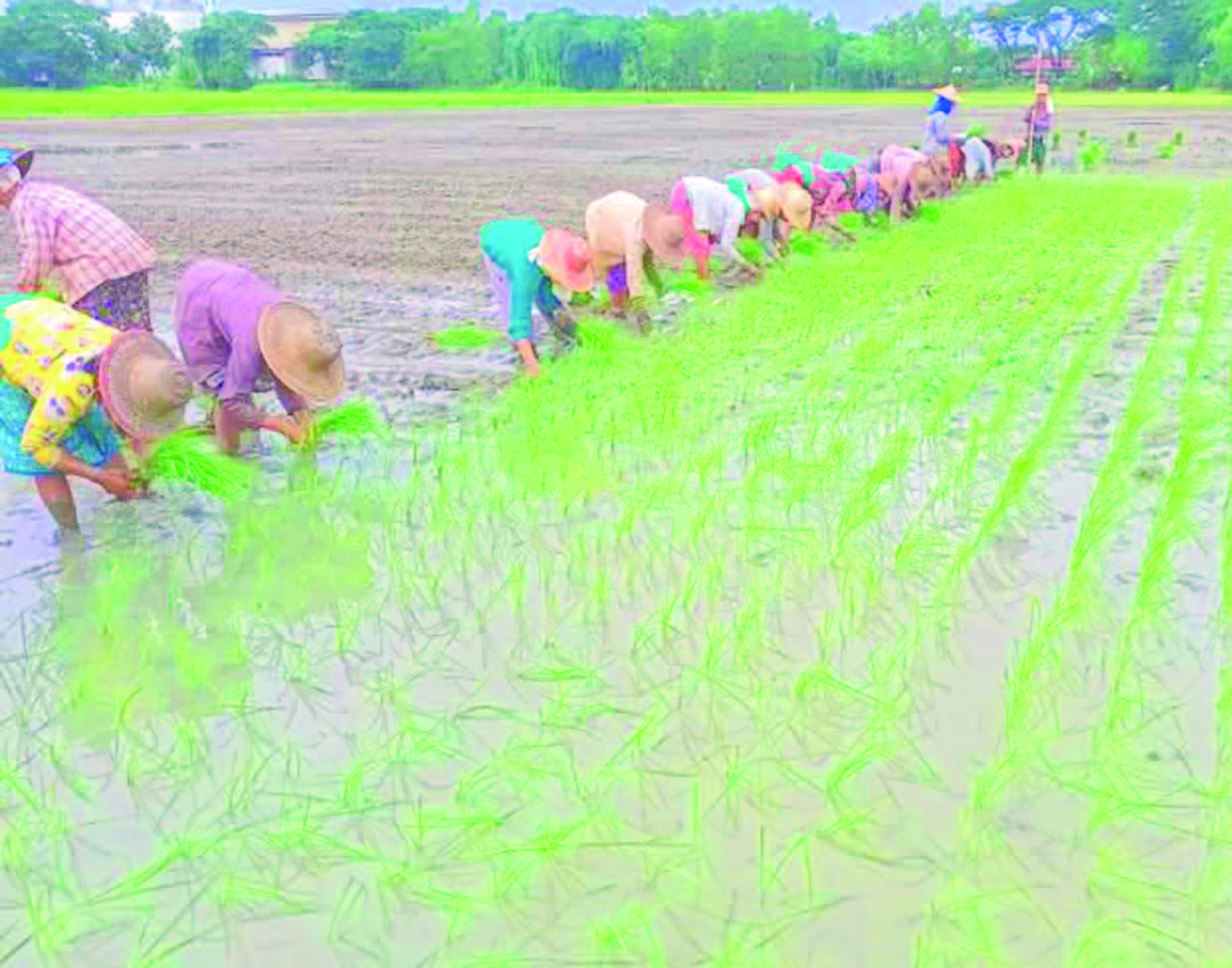
A total of 1,897,241 acres of monsoon paddy have been cultivated in Ayeyawady Region so far during the current monsoon season, out of the targeted 3,757,171 acres, according to the Ayeyawady Region Department of Agriculture.
“To achieve the targeted yield in line with the cultivation plan, the use of certified high-quality seeds has reached 97 per cent. During this monsoon season, nearly 800,000 acres have been improved through the use of sunnhemp as green manure to enhance soil fertility and conservation. Compost production using rice straw and organic fertilizers has also been carried out. Moreover, 8,500 acres of seed production fields have been established to ensure a sufficient supply of quality seeds. Farmers have also been provided with technical guidance on improved cultivation methods, soil fertility management, balanced and timely application of chemical fertilizers, and the use of lime and silt to increase rice productivity,” said U Thein Aung Than, deputy director of the department.
Monsoon paddy is being cultivated across Pathein, Kyonpyaw, Hinthada, Myanaung, Maubin, Pyapon and Labutta districts. Pyapon District has recorded the largest cultivation area. High-yielding rice varieties being grown include Sinthukha, Sinthwelat, GW-11, 90-Day, Aungnaingtoe, Manawthukha, Pakhan Shwewah, Theehtatyin, Hmawby-3 and Yayhmyoke Khan-1. Local varieties such as Kauknhin, Hnanka, Hsitpwa, Meedon, Byothtun, Mikauk and Ngasein are also under cultivation.
As part of efforts to increase rice exports, Ayeyawady Region has established a Rice Export Zone for the 2026-2027 financial year, cultivating 150,000 acres of Aemahta rice varieties and 50,000 acres of Pawsan rice varieties. To support farmers in using chemical fertilizers in their paddy fields, about 1,000 tonnes of urea fertilizer produced by Myanmar Petrochemical Enterprise are distributed. More than 26,000 tonnes of chemical fertilizers were distributed during last year’s monsoon paddy season. — Thitsa (MNA)/KTZH