By Thet Mon Tun
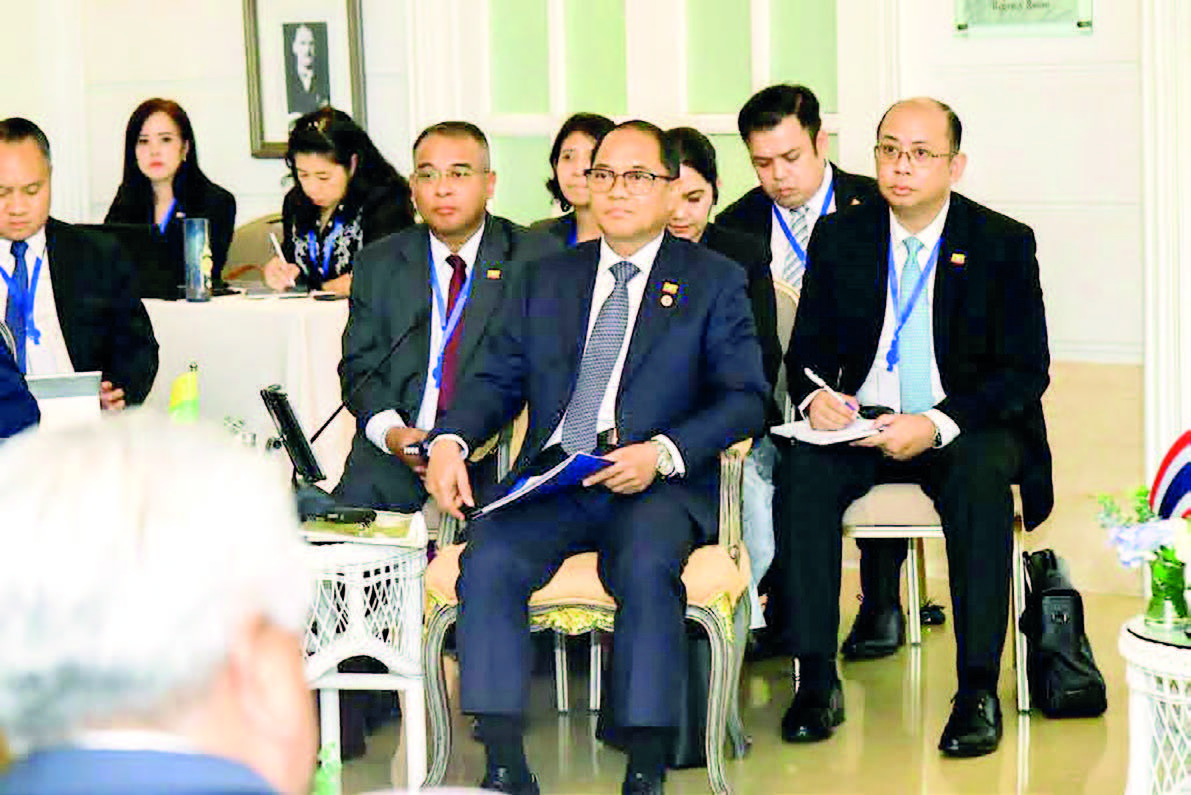
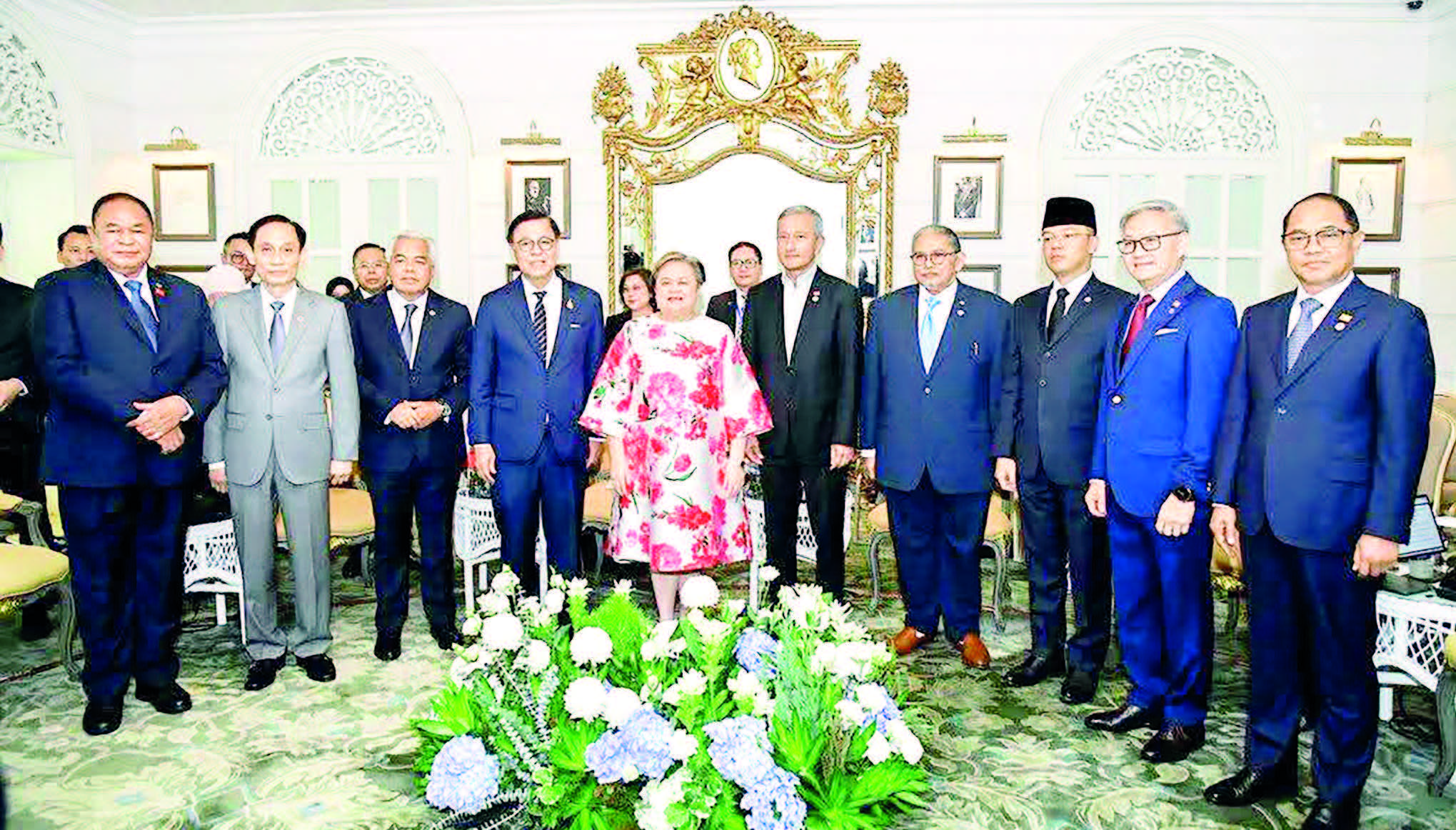
ON 12 July 2026, foreign ministers of the Association of South-East Asian Nations (ASEAN) and Myanmar’s Foreign Minister U Tin Maung Swe held talks and exchanged views in Bangkok, Thailand. During the meeting, Myanmar FM briefed his counterparts on Myanmar’s efforts to foster national stability, peace and development, and Myanmar’s commitment to regional integrity.
Facilitated by Thai Foreign Minister Sihasak Phuangketkeow, it was the very first return of face-to-face discussion between Myanmar and ASEAN since 2021. The meeting, despite being an informal talk, went well with frank, candid and constructive exchanges.
The Bloc’s stalled status quo has shifted to a better move
As a matter of fact, it is the responsibility of ASEAN to maintain the regional integrity, peace, stability, human rights and welfare of the people of the member states. However, efforts of the bloc in upholding the abovementioned values, particularly in the context of resolving the Myanmar issue, can only be made under the precondition of equality since Myanmar is still a fellow member and an inalienable part of ASEAN.
“No matter what, it is an informal meeting; it is a positive progress by talking in person instead of teleconferencing among the foreign ministers. That’s a significant move after a complete halt in communication in the past five years,” U Ko Ko, chairman of the Myanmar Narrative Think Tank Group, remarked.
ASEAN’s earlier overconfidence in its commitment in the five-point statement without a clear strategy resulted in nothing on the ASEAN side, but isolating its member state. On the other hand, Myanmar made steadfast efforts in implementing its own political and social strategies that suited its national conditions step by step. Myanmar’s unwavering struggles for internal peace and national development deserve respect and recognition.
Professor Zhai Kun is a leading scholar on ASEAN and South- East Asian Studies at Peking University of China. He shared his remark on the related issue with the writer as follows –
“The Five-Point Statement was an attempt to give ASEAN a common framework for responding to the crisis. However, its implementation has been limited, and ASEAN member states have not always shared the same understanding of how it should be applied. This has made ASEAN’s position appear cautious and sometimes inconsistent.”
Nevertheless, the communication deadlock between Myanmar and ASEAN over the past years now appears to be approaching an end. Only two-sided cooperation with mutual understanding, trust and respect between Myanmar and ASEAN can create a better shared future for the region, and produce a possible solution, which is pragmatic and fits with the national circumstances and specific characteristics of Myanmar.
“The more constructive interactions are made between Myanmar and ASEAN, the better improvement can be seen in Myanmar-ASEAN relations,” U Ko Ko remarked.
Myanmar’s consistent attitude towards ASEAN
Republic of the Union of Myanmar – a South-East Asian country that is located on the edge of the Indian Ocean and Pacific Ocean, and is adjacent to India, China and ASEAN – has been practising the foreign policy of positive neutrality, non-alignment and the Five Principles of Peaceful Coexistence.
This year marks the first year of the administration of Myanmar’s newly elected government following the general elections held in late 2025 and early 2026. In fact, regular sessions of the parliaments are currently convening and discussing wider topics.
On 9 July 2026, the Pyidaungsu Hluttaw (the highest legislative body of Myanmar) urged the union government to review and counter ASEAN’s five-point statement.
This movement was initiated by Pyithu Hluttaw parliamentarian Dr Nanda Hla Myint, who represents Kalaw Constituency. He submitted a proposal to the Pyidaungsu Hluttaw on 26 June, calling on the government to take appropriate measures against ASEAN’s five-point statement, arguing that it undermines Myanmar’s equal status within ASEAN, interferes in the country’s internal affairs, and no longer corresponds to current political realities of Myanmar.
A total of 30 parliamentarians in the Pyidaungsu Hluttaw discussed the topic with diverse views. All of them denounced and rejected ASEAN’s five-point statement from the perspective of sovereign equality.
It is the legitimate right and interest of a sovereign nation to exercise policies and tactics that are suitable for its own national characteristics when managing its own internal affairs. Thus, Myanmar has constantly been standing on the Myanmar-led/ Myanmar-owned approach, yet respecting the ASEAN Charter and international principles.
Accordingly, Myanmar FM U Tin Maung Swe cordially stressed during the meeting on 12 July in Bangkok that, “being the democratically elected government, it has the responsibility to implement the decision of the Parliament.”
He also added that it is important to have a thorough understanding of Myanmar’s complex political realities and to take a constructive approach which is consistent with the realities on the ground.
Regional integration demands mutual respect among member states
ASEAN’s regional integration plays a vital role in today’s era of a fluid and turbulent global environment. ASEAN has to remain united, wise and prudent by upholding ASEAN’s role in balancing the growing global geopolitical competition.
Concerning ASEAN’s regional integrity, Professor Zhai Kun remarked: “ASEAN also needs a clearer and more consistent process for reviewing its policies and responding to changing circumstances. Its credibility will depend not only on maintaining unity among member states, but also on showing that its principles can be applied in a balanced and meaningful way.”
Myanmar, as a member of the ASEAN family, will continue to cooperate with ASEAN and safeguard our legitimate rights and interests in both regional and global governance mechanisms.