
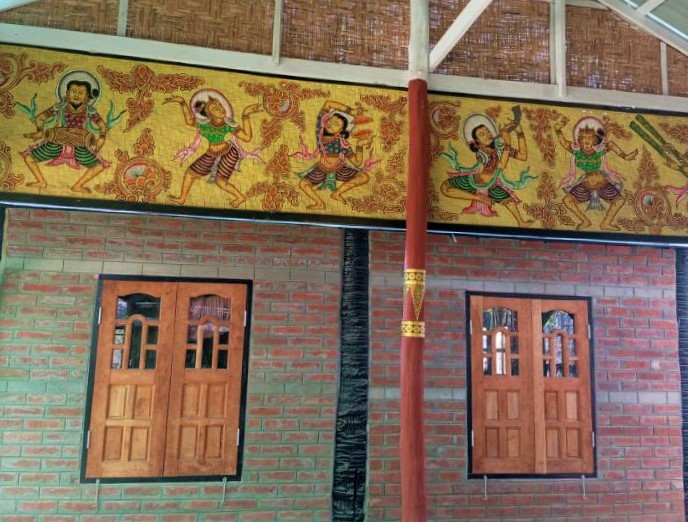
THE mural paintings of four eras are being preserved at hotels and restaurants during this low season in the Bagan Ancient Cultural Heritage Zone.
Hotels, motels, and restaurants in Bagan usually carry out renovation works during the off-season. The paintings representing the four eras of Myanmar culture are painted on brick walls and bamboo walls for both local and foreign visitors to be able to experience and appreciate Bagan’s cultural heritage.
To create these artworks, artists are invited from Myinkaba Village in Bagan. During the low travel season, mural painting jobs offered to artists in Bagan and other regions provide convenient employment opportunities.
“When tourist arrivals decline in Bagan, we are often hired to paint artworks representing the four eras at hotels and restaurants. Once tourism resumes in August, we will return to selling hand-painted artworks, figurines, and paintings to visitors at Bagan pagodas. We paint the four-era images on either brick walls or bamboo walls using watercolour paints. Charges depend on the wall size and are calculated per square foot. When travellers arrive in Bagan and see artworks from the Bagan era along with those from other eras, it enhances the image of the Bagan cultural region. The traditional heritage of the craftsmen who accompanied King Manuha after his arrival in Bagan can still be seen preserved today in Myinkaba Village only,” said U Zeya, artist from Myinkaba village.
The mural paintings commonly portray the lifestyles, culture, and religious affairs of the Bagan, Pinya, Inwa, and Konbaung eras. Hotels mostly feature traditional Bagan cultural paintings, while restaurants often display paintings from all four eras. Artists from Myinkaba village charge around K20,000 per square feet for paintings on bamboo walls and K25,000 per square feet for paintings on brick walls.
The ability of artists from Myinkaba village to continue creating these mural paintings dates back to the Bagan era, after King Anawrahta conquered Thaton and brought King Manuha, the 25th of the Thaton dynasty, to Bagan. The craftsmen who accompanied King Manuha and helped construct temples and pagodas in the Myinkaba area created mural paintings at that time. These artistic traditions and heritage remain preserved in Myinkaba village to date, continuing the preservation of Myanmar’s traditional cultural arts. — Thitsa (MNA)/KTZH