
The government, in its tenure, pledges to develop Agri-based industries based on cotton cultivation to achieve the targeted per-acre cotton yield.
As cotton cultivation and production are beneficial for the country, the relevant ministries, cotton growers, and officials have to strive to achieve the target per-acre yield, said President of the Republic of the Union of Myanmar U Min Aung Hlaing at the seminar titled “From Cotton Cultivation towards Textile Industry” held at the city hall in Magway yesterday morning.
In his opening speech, the President recalled that the nation’s cotton acreage had fallen to about 400,000 acres in the 2019-2020 financial year, down from more than 800,000 acres in 2011-2012.
Since assuming State responsibilities, he reiterated that efforts have been made to promote cotton cultivation. As a result, the nationwide average cotton yield increased from 436 viss per acre on more than 390,000 acres cultivated in the 2021-2022 season to 499.2 viss per acre on more than 540,000 acres in the 2025-2026 planting season. Total nationwide cotton production exceeded 27.43 million viss. Compared with the country’s domestic cotton requirements, this indicates that cotton production has generated a substantial surplus.
At current world market prices, the President underlined that cotton is trading at between US$1,800 and US$1,900 per tonne. If the nation achieves its target cotton yield of 700 viss per acre, the sale of surplus cotton could generate an estimated US$500 million in additional export revenue.
He guaranteed that the State will also provide the necessary support and assistance. During its tenure, the government will make every effort to ensure the successful development of the cotton cultivation and production sector.
“The President noted that irrigation and supplementary water for cotton cultivation can be supplied through solar powered river pumping projects. He added that, with labour shortages posing a growing challenge in agriculture, seed sowing equipment such as feed seeders is now being utilized. The President stressed the need to develop agro-based industries based on cotton cultivation.
He instructed that as cotton cultivation is a sector that brings benefits to the country, the Ministry of Agriculture, Livestock and Irrigation, the Ministry of Cooperatives and Rural Development, and the Ministry of Industry and MSME Development are required to give due attention to this sector and make concerted efforts, urging cotton farmers and responsible officials to work hard to achieve the targeted per-acre yield.
After the seminar, the President asked the attendees about the ways to develop cotton cultivation and production.
The seminar was attended by the President’s entourage, the chief ministers of Sagaing, Magway, and Mandalay regions, as well as representatives of cotton farmer groups, seed producers, seed oil millers, cotton wool and yarn producers, loom operators, and ginners.
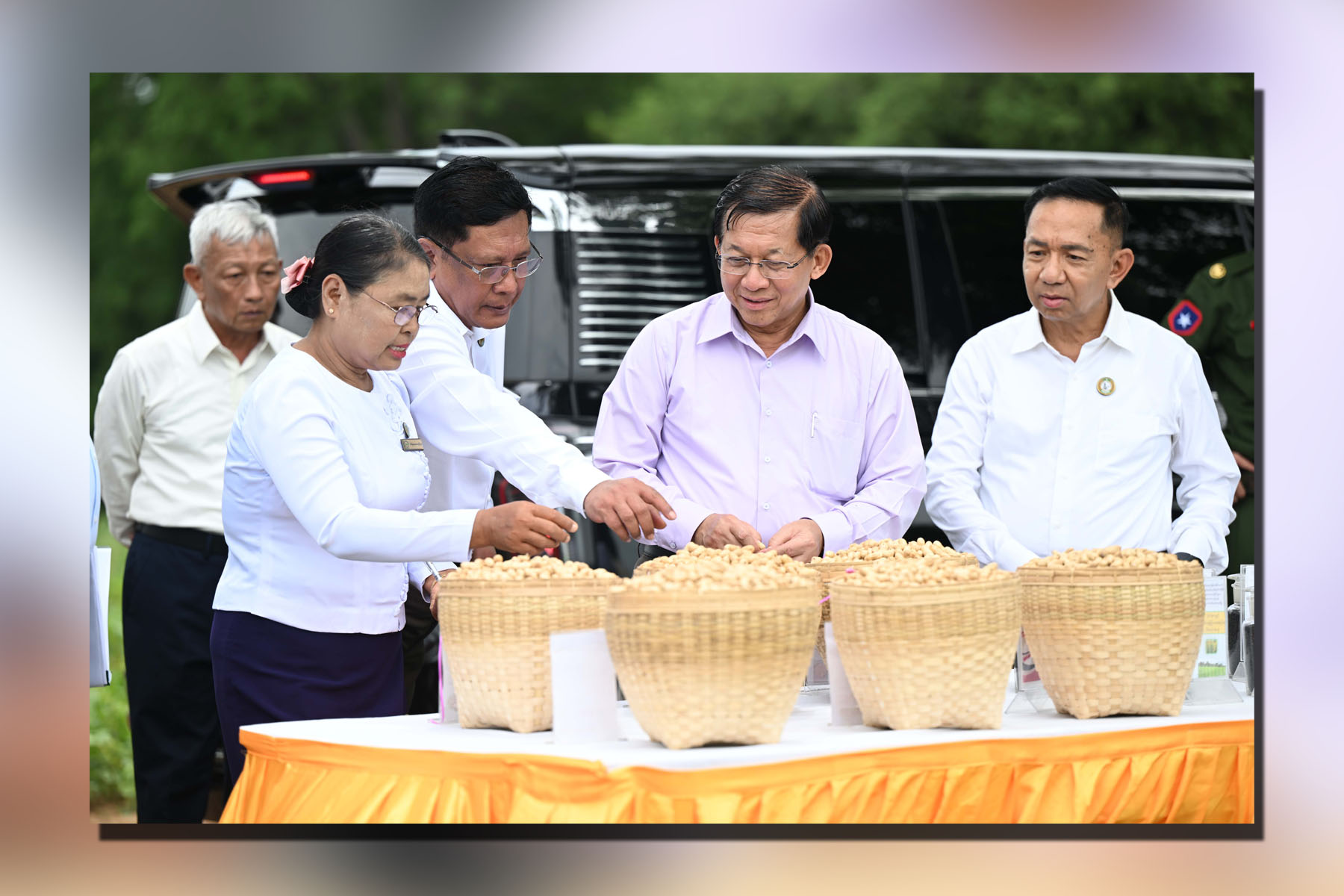
The President and party visited the Regional Research Centre (Magway) of the Department of Agriculture. He also inspected the display of quality seeds such as paddy, groundnut, green gram, cotton, sesame and sunflower, the organic fertilizer and natural pesticide solution produced by the centre, and the research tests conducted at the Nano Technology for Seed Treatment Chamber with the use of cold plasma and UV machines and crop dryers.
In his guidance, the President stressed the need not only to produce high yield, quality certified crop varieties, but also to pursue research and production that ensure crops meet international market standards, covering exportable traits such as colour, aroma, taste, and size.
He underscored that the centre needs to conduct trials and research to increase the per-acre target yields of Myanmar’s Pawsan rice and oilseed crops, including groundnuts and sesame, and to ensure sufficient domestic production of high-quality, pure seeds.
The President viewed the research farm of crops in the centre plots and test plantations of green gram, sesame and groundnut and gave necessary guidance to officials. — MNA/TTA