
By Kyaw Zay Ya
ON A recent public holiday, the weather was pleasantly cool. The sky was soft and clear blue. I decided to take a short drive from my home in Nay Pyi Taw. I went to pay homage to the Maravijaya Buddha image. There is something deeply calming about starting a day with a visit to a sacred place. This particular morning turned out to be one of the most memorable ones.
I drove my car through the quiet, tree lined roads of the capital. The morning sun cast a golden glow over everything. The air was fresh. The peaceful atmosphere was a welcome break from my usual office routine. Within about fifteen minutes, I reached the sprawling Buddha Garden in Dekkhinathiri Township. There, the magnificent Maravijaya Buddha image stands.
The Meaning of “Maravijaya”
The name “Maravijaya” (မာ ရဝိဇယ) comes from the Pali language. “Mara” (မာရ်) means the evil one or spiritual defilements. “Vi” (ဝိ) means special or supreme. “Jaya” (ဇယ) means victory (အောင်ခြင်း). Together, it means “Victory over the Five Maras” (မာရ် ငါးပါးက ိ ုအောင် ခြင် း). The Five Maras are: desire (တဏှာ), death (မရဏ), defilements (ကိလေသာ), fear (ဘေး), and the five aggregates (ခန္ဓာငါးပါး). People believe that paying homage to this image brings protection from all dangers and bestows success and prosperity upon devotees.
Arriving at the Site – A Scene of Devotion
As I approached the main gateway, I was struck by the number of pilgrims. People of all ages, from young children to elderly grandparents, had come from different parts of the country. Some were in family groups, others wore monastic robes, and many walked slowly with their hands in prayer. The atmosphere was one of quiet reverence and shared faith.
The Grandeur of the Image and the Epic Journey of the Marble
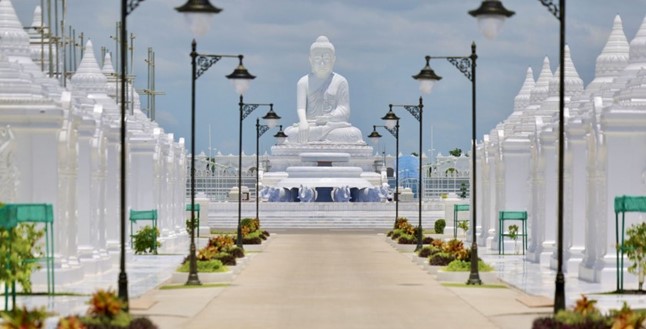
I walked through the main gateway. The moment I stepped inside, I saw the great Buddha image for the first time. My breath stopped for a second. A deep feeling of reverence filled my heart. I could not move my eyes away. I immediately started walking straight toward the image. My feet moved on their own. I forgot everything around me. As I got closer, I stood at the foot of the lotus throne (ကြာပလ္လင်တော်). I slowly looked up. A deep sense of awe washed over me. The Maravijaya Buddha image is not just any statue. It is the world’s tallest marble carved seated Buddha image. The image itself rises 63 feet. The throne adds another 18 feet. The total height is 81 feet — roughly the height of an eight storey building. The statue weighs 1,782 tonnes. The throne weighs 3,510 tonnes. Together, they tip the scales at 5,292 tonnes. To put that into perspective, this sacred image weighs even more than a space shuttle. I stood there and could not help but marvel. Such an enormous weight was calculated with great precision. The image was set perfectly upright — a truly remarkable engineering achievement. I had also read about the journey of the marble in an article. The massive raw blocks were quarried from Sagyin Hill, near Mandalay. Because they were so enormous, the image had to be cut into four sections and the throne into five sections. The transport began by water. The first stage went from Sagyin Hill to Semikhon Port in Myingyan Township. That trip took 105 days, from 11 June 2020 to 23 September 2020. The second stage was by land. The blocks moved from Semikhon Port to the Buddha Garden site in Nay Pyi Taw. That took only five days — from 25 January 2021 to 29 January 2021. Thousands of tons of marble were handled. Every section was delivered successfully. It is an astonishing logistical achievement that truly deserves to be recorded in history. Standing there, looking up at the finished image, I felt both awe and gratitude.
I noticed something thoughtful. For the elderly, the unwell, or those who have difficulty walking, there is a short, roofed flight escalator. It helps them ascend to the main terrace. I watched an old grandfather use it slowly. This ensures that everyone can pay their respects without hardship. I felt grateful for this kindness.
The Buddha Garden – A Complete Sacred Landscape
After paying homage to the main image, I started exploring the Buddha Garden (ဗုဒ္ဓဥယျာဉ် တော်). The area around the main image is not just an open field. It has been carefully designed as a sacred landscape. I decided to visit each place one by one.
First, I walked to the Sudhamma Rest Houses (သုဓမ္မာဇရပ်). These beautifully built rest houses use traditional teak pillars. They have Myanmar style carvings. I sat down for a moment. The shade was cool. Pilgrims rested around me. The ancient architectural spirit is still alive here.
Next, I went to Mucalinda Lake (မုစလိန္ဒအိုင်). This lake was built exactly according to historical accounts. Senior monks gave their advice on it. The lake represents the story of the Mucalinda serpent king. He protected the Buddha from a storm. I stood by the water. It was calm and clear. The serene environment made my mind peaceful.
Then, I visited the Nagaron Shrine (နင်္ဂ ါးရု ံဘု ရား). This shrine is based on Buddhist scriptures. It shows the great Naga king wrapping his coils seven times around the Buddha. He spread his hood as a canopy. He protected the Enlightened One from wind and rain. The stone carving here is exceptionally fine. I stood there for a long time. It was moving to behold.
After that, I walked to the Stone Inscription Halls (ကျောက်စာ ရုံစေတီများ). This is one of the most extraordinary features of the garden. There are 1,444 stone slabs in total. 1,440 slabs contain the Tipitaka (ပိဋကတ်သုံးပုံ) from the Sixth Buddhist Council. Four additional slabs hold the commemorative chronicle of the site. Each slab measures three feet nine inches by six feet three inches. The thickness is 7.2 inches. I touched one slab gently. What makes this truly special is that the texts are inscribed not only in Pali but also in Romanized script. A council of five State Ovadacariya Sayadaws (နိုင်ငံတော်ဩဝါဒစရိယ ဆရာတော်ကြီး ၅ ပါး) supervised the work. They made the Dhamma accessible to the wider world. This was inspired by the UNESCO recognized stone inscription library at the Maha Loka Marazein Buddha in Mandalay. Then I saw a charming sight. Three young women dressed in traditional Myanmar costumes were standing with the stone inscription hall as their background. They were taking photos with their mobile phones and smiling together. When I saw that scene, I could not help but smile.
Next, I entered the Ordination Hall (သိမ်တော်ကြီး / သာသနာ့ ဗိမာန်တော်). It is modelled after the Great Cave Ordination Hall at Kaba Aye in Yangon. That was where the Sixth Buddhist Council was held. This majestic building can accommodate 900 monks and 1,200 lay devotees. That is a total of 2,100 people. Inside, I saw a large image of the Venerable Ananda (နောင်တော်ကြီး ရုပ်ပွားတော်). I learned something interesting. Before carving the final statue, craftsmen first made a 9 foot prototype. They sought guidance from the monks. That is a mark of deep respect for tradition.
After the buildings, I strolled through the gardens. The garden is a delight throughout the year. I saw Kyee trees (ကျည်းပင်). There is a sacred Bodhi tree (ဗော ဓိညောင်ပင်) brought from India. I also saw Sal trees (အင်ကြင်းပင်) from Lumbini — the Buddha’s birthplace. There are groves of Lint Lun bamboo (လင်းလွန်း တောအုပ်). Nearly 1,000 Kaday (ကံ့ကော်) ironwood trees stand tall. A natural stream has been straightened. A bridge was built in the style of the Mandalay Yadanabon era’s “Mingala Bridge” (မင်္ဂလာတံတား). Walking along the paths, I felt coolness from the white marble. The shade of the trees refreshed my mind. It was a true mental refreshment.
A Prayer for Peace and Gratitude
As the morning sun rose higher, I found a quiet spot near the front of the main image – right in the direction the Buddha faces (south to north). The stone inscription halls stand directly in front of the Buddha’s face, symbolizing that the Word of the Dhamma is always under the Buddha’s watchful eye. This arrangement filled my heart with joy. I then offered my sincere thanks. I am deeply grateful to the government of the Republic of the Union of Myanmar for having this magnificent Buddha image built in Nay Pyi Taw, allowing all citizens and visitors to come and worship freely. Following the very meaning of the name “Maravijaya” — Victory over all enemies and obstacles — I prayed:
May our entire country be free from all dangers and conflicts. May peace and calmness prevail throughout the land. May the nation prosper in economy and well being. May the Sasana shine brightly for a long time.
Conclusion – A Journey to Remember
Driving back home that late morning, I felt a deep sense of inner peace. The Maravijaya Buddha image is more than a tourist attraction or a religious monument. It is a symbol of Myanmar’s faith, engineering brilliance, architectural heritage, and literary preservation all in one place. If you ever have the chance to visit Nay Pyi Taw, do not miss the opportunity to see this glorious image. Whether you are a devout Buddhist or simply a lover of art and history, the Maravijaya Buddha Garden will leave you humbled, inspired, and refreshed.