
By U Khin Maung Myint
Teaching is often described as one of society’s noblest professions. Yet when we speak of teachers, many immediately think of school classrooms, textbooks, examinations, and academic qualifications. In reality, teaching begins long before a child enters school and continues throughout life.
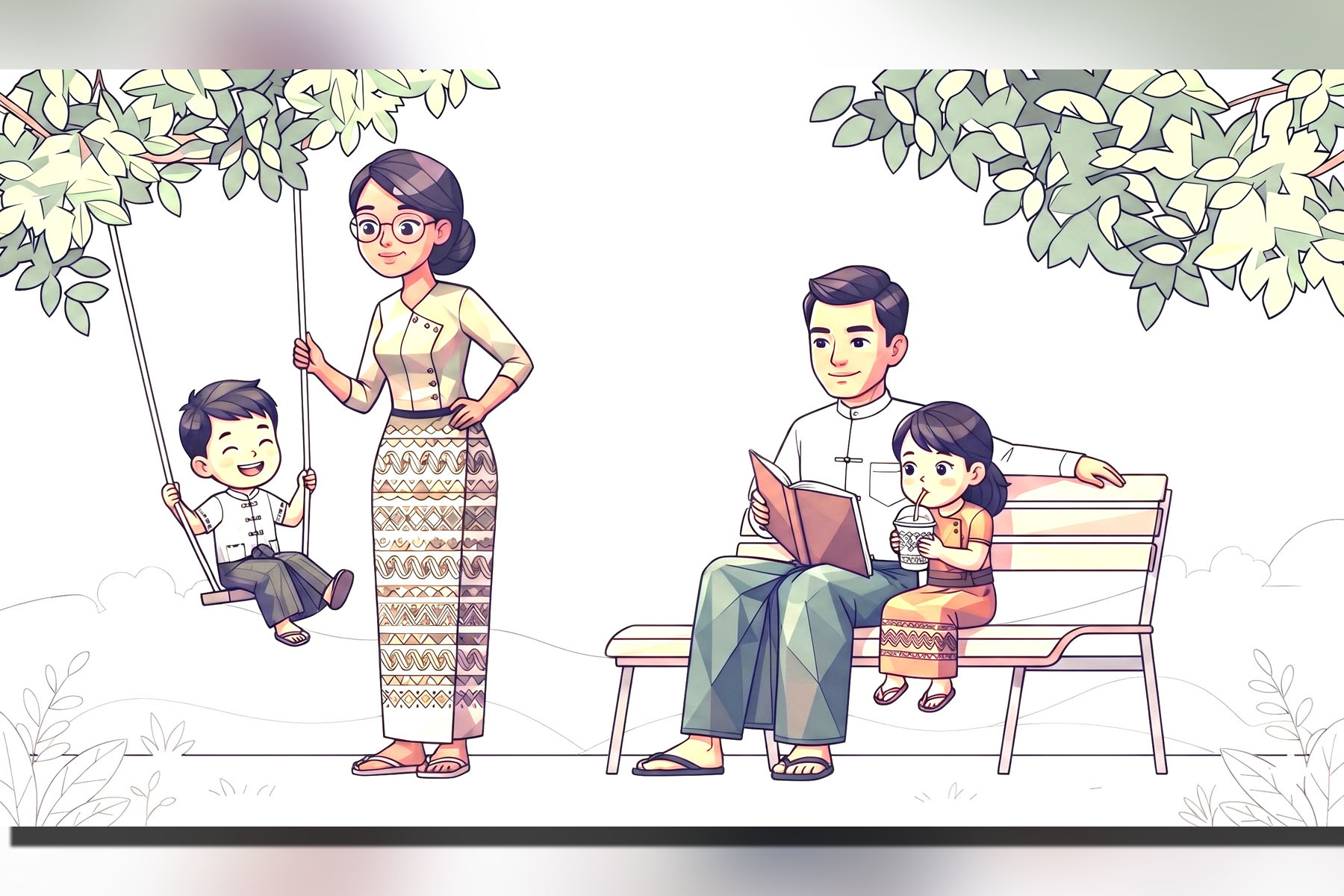
The first teachers are usually parents and family members. They teach language, manners, values, beliefs, and social behaviour. As children grow, they encounter nursery teachers, school teachers, tutors, trainers, lecturers, professors, mentors, and coaches. Even in adulthood, learning continues through workplace training, self-study, community organizations, and life experience.
Education, therefore, is not merely a profession. It is a lifelong human endeavour.
A formal definition might be:
Teaching is the professional and social practice of facilitating learning, personal development, and the acquisition of knowledge, skills, values, attitudes, and competencies throughout the human lifespan.
The Parent’s Question
Educational scholars have produced numerous theories explaining how people learn. Behaviourism emphasises practice and reinforcement. Cognitive theories focus on mental development and understanding. Constructivist approaches encourage learners to build knowledge through experience. Humanistic education seeks to develop the whole person, including emotional well-being.
While such theories contribute greatly to educational practice, most parents ask a much simpler question:
“What is best for my child?”
Parents are less interested in whether a teaching method belongs to one educational philosophy or another. They want to know whether their child is learning, growing, gaining confidence, and developing into a responsible adult.
This perspective reminds educators that every child is unique. What works brilliantly for one learner may not work for another. Effective teaching therefore requires flexibility, wisdom, and an understanding of individual needs rather than rigid adherence to a single educational theory.
Major Learning Theories and the Parent’s View
|
Theory |
Core Idea |
Parent’s Question |
|
Behaviourism (Skinner) |
Learning through repetition, reinforcement, rewards |
“Will this help my child achieve good habits and results?” |
|
Cognitivism (Piaget) |
Learning develops with intellectual maturity |
“Is this appropriate for my child’s stage of development?” |
|
Constructivism (Vygotsky, Bruner) |
Children build knowledge through experience |
“Is my child actively understanding, not just memorising?” |
|
Humanism (Maslow, Rogers) |
Education should develop the whole person |
“Is my child happy, confident, and emotionally secure?” |
|
Social Learning (Bandura) |
People learn by observing others |
“Are my child’s peers and teachers positive role models?” |
|
Connectivism (modern digital theory) |
Learning occurs through networks and technology |
“Can my child thrive in a digital world?” |
|
|
|
|
Teachers and Parents as Partners
Successful education depends upon a partnership between teachers and parents.
Teachers bring professional expertise in curriculum design, pedagogy, and assessment. Parents bring intimate knowledge of their children’s personalities, strengths, challenges, interests, and aspirations.
When these perspectives complement one another, children benefit enormously.
The most successful schools are often those where educators and parents see themselves not as opposing parties but as partners pursuing a common goal: the flourishing of the child.
Education for a Lifetime
In an era of rapid technological change, the traditional model of completing one’s education in youth is becoming increasingly outdated. New skills must be learned throughout adulthood. Trainers, workplace educators, online tutors, and self-directed learning are now indispensable components of modern life.
Consequently, the role of teaching continues to expand. The teacher of the twenty-first century may be found in a university lecture hall, a corporate training centre, a religious community, an online platform, or a family home.
The setting may change, but the purpose remains constant.
The highest calling of teaching is not merely to transfer knowledge but to nurture capable, ethical, compassionate, and lifelong learners.
In the final analysis, educational theories are valuable tools, but they are just that: tools. The true measure of education lies not in its theories but in its impact on human lives. For parents, teachers, and society alike, the enduring question remains unchanged:
“Is this helping our children become the best versions of themselves?”
If the answer is yes, then teaching has fulfilled its noblest purpose.
Bibliography
Bandura, A (1977). Social Learning Theory. Englewood Cliffs, NJ: Prentice-Hall.
Bruner, J S (1960). The Process of Education. Cambridge, MA: Harvard University Press.
Maslow, A H (1954). Motivation and Personality. New York: Harper & Row.
Piaget, J (1952). The Origins of Intelligence in Children. New York: International Universities Press.
Rogers, C R (1969). Freedom to Learn. Columbus, OH: Merrill Publishing.
Skinner, B F (1953). Science and Human Behaviour. New York: Macmillan.
Vygotsky, L S (1978). Mind in Society: The Development of Higher Psychological Processes. Cambridge, MA: Harvard University Press.
UNESCO. (2024). Global Education Monitoring Report. Paris: UNESCO Publishing.
Organisation for Economic Co-operation and Development (OECD). (2023). Education at a Glance. Paris: OECD Publishing.
Rahula, W. (1974). What the Buddha Taught. New York: Grove Press.
The Dalai Lama. (1999). Ethics for the New Millennium. New York: Riverhead Books.


