
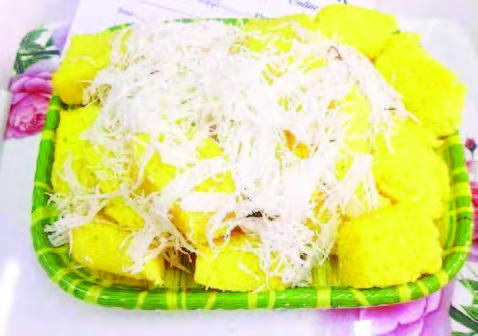
Palm Fruit Cake
A Traditional Myanmar Seasonal Delight
WHEN the late monsoon season arrives, from Wagoung and Tawthalin to Thadingyut, and ripe palmyra fruits come into season, one traditional treat that can be found glowing golden-yellow and filling the air with its sweet aroma along Myanmar’s rural roads and urban streets is Palm Fruit Cake.
Served in little green banana-leaf cups, these soft, fluffy golden cakes are topped with delicate shreds of white coconut. Their inviting colour, aroma and presentation perfectly capture the essence of Myanmar’s traditional culinary heritage.
What makes Palm Fruit Cake distinctive is its unique combination of the natural fragrance of ripe palmyra fruit with a pleasant balance of sweetness and creaminess. The natural sweetness and delicate aroma of ripe palmyra fruit permeate the entire cake.
Unlike bread, which can be dry, the cake is steamed, giving it a moist, soft texture that feels wonderfully tender and almost melts in the mouth with every bite.
The white shreds of grated coconut are lightly mixed with salt, creating a subtle savoury note that perfectly balances the cake’s fragrant sweetness and prevents it from becoming overly rich. The creamy coconut flavour and mild saltiness complement the natural sweetness of the palmyra fruit beautifully.
If you’re already craving a taste, let’s take a look at how to make this traditional treat at home.
Ingredients
(The following quantities are suitable for making one batch in a household steamer.)
For extracting the palmyra fruit pulp
1. 1 large ripe palmyra fruit – with dark skin, a golden-yellow colour and a fragrant aroma
2. About 1 cup water – for extracting the pulp
For the cake batter
3. 2 cups rice flour (or coarse rice flour)
4. 2 tablespoons glutinous rice flour – for a soft, slightly chewy texture
5. ½–¾ cup thick jaggery syrup (or sugar), adjusted to taste
6. ½ teaspoon yeast – to help the batter rise and become light and fluffy
7. ½ teaspoon salt
For the topping
8. 1 cup grated coconut
9. A small amount of salt – to mix with the coconut
Step-by-Step Preparation
1. Extract the palmyra fruit pulp
Peel away the dark outer skin of the ripe palmyra fruit and separate the three large seeds inside.
Place the seeds in a bowl and sprinkle them with a little water. Rub and squeeze the seeds by hand to extract the thick, golden-yellow pulp.
Strain the pulp through a fine sieve to remove the fibres.
Tip: For a sweeter and more fragrant pulp, place the extracted pulp in a thin cloth bag and hang it for about an hour. This allows the thin liquid containing some bitter compounds to drain away, leaving a thicker, more concentrated pulp.
2. Prepare and ferment the batter
In a large mixing bowl, combine the rice flour, glutinous rice flour, yeast, salt, jaggery syrup (or sugar) and strained palmyra pulp.
Mix thoroughly until a thick batter forms.
Cover the bowl tightly and leave it in a warm place for about 3-4 hours, or until the batter has risen and become airy.
3. Prepare the steaming cups
Once bubbles have formed and the batter has roughly doubled in volume, fill a steamer with water and bring it to a boil.
Prepare small banana-leaf cups, or alternatively use lightly greased small bowls or moulds.
4. Fill and steam the cakes
Gently stir the risen batter once or twice to release excess air.
Fill each cup to about three-quarters full, leaving room for the cakes to rise during steaming.
Place the cups in the steamer, cover tightly and steam over high heat for approximately 15-20 minutes.
5. Add the coconut and serve
Check whether the cakes are cooked by inserting a toothpick into the centre. If it comes out clean, the cakes are ready.
Sprinkle the lightly salted grated coconut over the top and steam for another minute.
Remove from the steamer and allow to cool slightly.
Serve warm with a cup of hot Myanmar green tea.
A Look at Its Nutritional Value
Palm Fruit Cake is a traditional seasonal snack made with ripe fruit and cooked by steaming, rather than frying.
Steamed rather than fried
Because the cakes are steamed without frying or roasting in oil, they contain no added cooking oil from the preparation process. This makes them a lighter alternative to many traditional fried snacks.
Naturally colourful and rich in plant compounds
The bright golden-yellow colour of ripe palmyra fruit is associated with carotenoid pigments, including beta-carotene. Beta-carotene can be converted by the body into vitamin A, which plays an important role in normal vision, skin health and immune function.
Fibre and fermentation
Palmyra fruit pulp provides dietary fibre, while fermenting the batter before steaming contributes to the cake’s characteristic texture and flavour. Fermentation can also affect the digestibility and nutritional characteristics of cereal-based foods.
A Few Things to Keep in Mind
Because the recipe contains jaggery or sugar and a substantial amount of carbohydrate from rice flour, people with diabetes or those monitoring their blood-glucose levels should consider reducing the added sugar and keeping portions modest.
The grated coconut used as a topping also contains naturally occurring fat, including saturated fat. Those who need to manage their blood cholesterol levels may therefore wish to use a smaller amount of coconut.
With its fragrant palmyra fruit, soft steamed texture and lightly salted coconut topping, Palm Fruit Cake is a delightful seasonal treat that showcases flavours and culinary traditions of Myanmar. That’s our traditional food feature for this week. Enjoy! — Moon


