
By Maung Maung Myint Thein (RIT)
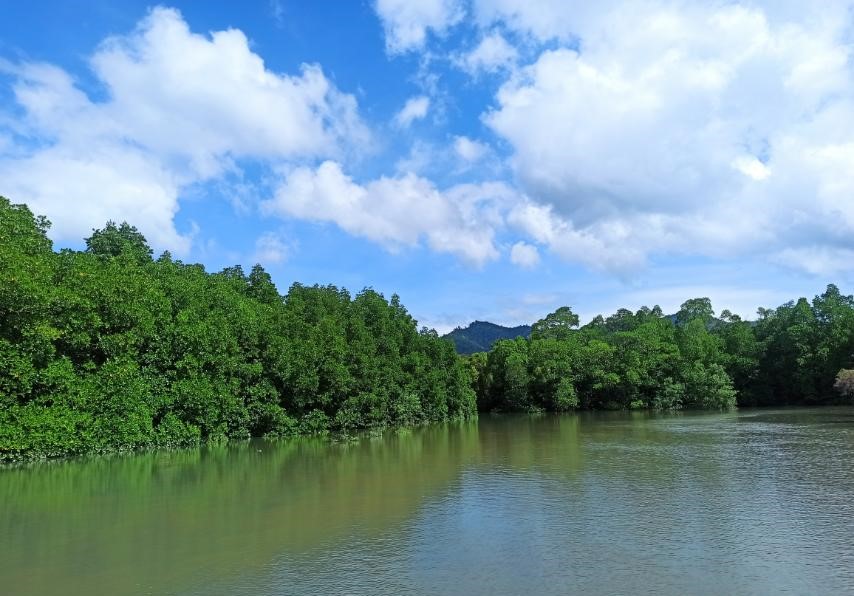
Along the world’s tropical and subtropical coastlines, an extraordinary natural defence system stands between land and sea. Its trees grow in salty water, its tangled roots anchor fragile shorelines, and its dense vegetation provides shelter for countless marine species. Yet, despite their immense ecological and economic value, mangrove forests have spent decades under pressure from human development. Today, however, there are encouraging signs that these vital ecosystems are beginning to recover, offering renewed hope for coastal communities and the global fight against climate change.
A study reported by the BBC in June 2026 found that the global balance of mangrove cover has improved since 2010, as declining deforestation and natural regeneration have helped offset losses. Stronger legal protections and growing public awareness have contributed to this progress. Myanmar and Indonesia, two countries with extensive mangrove resources, are among the places where encouraging developments have been observed.
The recovery is significant, but it should not be mistaken for a complete environmental victory. Mangroves continue to face threats from coastal development, aquaculture, pollution and rising sea levels. Protecting what remains, restoring degraded forests and ensuring that coastal development respects ecological limits will be essential to sustaining this progress.
Nature’s Powerful Defence Against Coastal Disasters
Mangroves are specialised trees and shrubs adapted to survive in the challenging conditions of tidal environments. Found along coastlines, river mouths, estuaries and deltas, they tolerate varying degrees of salinity and thrive in waterlogged, oxygen-poor soils.
Their importance extends far beyond their distinctive appearance. Mangrove forests act as natural barriers against coastal erosion, waves and storm surges. Their complex root systems slow water movement, trap sediments and help stabilise shorelines. By reducing wave energy and limiting the movement of sediment, healthy mangrove belts can lessen the impacts of certain coastal hazards.
For communities exposed to tropical cyclones, flooding and other extreme weather events, these forests can provide an important layer of natural protection. The devastation caused by the 2004 Indian Ocean tsunami also helped raise awareness in parts of the region about the protective value of coastal ecosystems.
Nevertheless, mangroves should not be viewed as a complete substitute for disaster preparedness, early-warning systems or engineered coastal defences. Their protective capacity varies according to forest width, density, species composition, coastal geography and the strength of the incoming waves. Effective disaster-risk reduction requires a combination of healthy ecosystems, sound planning and appropriate infrastructure. As climate change increases pressure on many coastal environments, preserving mangroves is becoming an increasingly important component of long-term resilience.
A Natural Ally in the Fight Against Climate Change
Beyond coastal protection, mangroves play a valuable role in regulating the global climate. They capture carbon dioxide through photosynthesis and store carbon in their trunks, branches, roots and, particularly, the waterlogged soils beneath them.
These carbon-rich environments are part of what scientists call blue carbon ecosystems – coastal and marine ecosystems that capture and store carbon. Because mangrove soils can accumulate organic material over long periods, substantial quantities of carbon may remain stored beneath the forest floor.
When mangroves are cleared, drained or severely degraded, however, the carbon accumulated in their soils and vegetation can be released into the atmosphere. The destruction of these ecosystems therefore threatens not only biodiversity and coastal livelihoods but also global efforts to reduce greenhouse-gas emissions.
The United Nations Environment Programme (UNEP) identifies mangroves as among the world’s most carbon-rich tropical ecosystems. Its research also highlights their role in reducing erosion, moderating waves, supporting fisheries and providing habitats for a wide range of wildlife.
Protecting mangroves is consequently a practical nature-based climate solution. It can complement emissions reductions in energy, transport, industry and agriculture while delivering immediate benefits to communities living along vulnerable coastlines.
However, mangrove conservation cannot replace the urgent need to reduce fossil-fuel emissions. Its greatest contribution comes when ecosystem protection forms part of a broader climate strategy.
The Foundations of Marine Biodiversity and Food Security
Mangrove forests are also essential to the survival of numerous marine and terrestrial species. Their submerged roots create sheltered habitats in which juvenile fish, shrimp, crabs and other aquatic organisms can feed and develop with reduced exposure to predators.
These habitats are particularly important to fisheries. Many commercially valuable marine species depend on mangrove environments during at least one stage of their life cycles. By providing feeding grounds and nursery habitats, healthy mangroves can help sustain fish populations and support the livelihoods of fishing communities.
The ecological benefits extend beyond the forests themselves. Mangroves are connected to neighbouring ecosystems, including seagrass beds, coral reefs, rivers and coastal wetlands. Nutrients, organic matter and marine organisms move between these environments, creating interconnected ecological systems.
Damage to mangroves can therefore have consequences well beyond the immediate area of forest loss. Declining habitat quality may affect fisheries, weaken coastal food webs and reduce the resilience of surrounding ecosystems.
For millions of people, particularly in developing countries, these environmental functions have direct economic and social significance. Mangroves support food supplies, employment and income while helping maintain the natural resources on which coastal communities depend. Their protection should consequently be understood not simply as a conservation objective but also as an investment in food security, economic stability and human well-being.
From Destruction to Recovery: A Global Turning Point
For much of the past century, mangrove forests were cleared to make way for aquaculture, agriculture, settlements, tourism facilities and other forms of coastal development. In many areas, short-term economic gains were prioritized over the long-term value of natural ecosystems.
The consequences have been considerable. Forest clearance has destroyed wildlife habitats, reduced natural coastal protection and contributed to greenhouse-gas emissions. Pollution, excessive resource extraction and changes to river flows have added further pressure.
Recent evidence nevertheless suggests that the global trend is not entirely negative. In a report published in June 2026, the BBC described research indicating that mangrove gains have increasingly offset losses since 2010. Reduced deforestation, stronger protection and natural regeneration have all contributed to this shift.
One important lesson is that damaged ecosystems may recover when destructive pressures are removed, and natural conditions are restored. Where water flows, tidal movement, sediment supply and other environmental conditions remain suitable, mangroves can regenerate without every tree needing to be planted by hand.
This does not mean that every restoration project will succeed. Planting mangroves in unsuitable locations, ignoring local hydrology or selecting inappropriate species can produce disappointing results. Successful restoration requires an understanding of the natural conditions that allow mangrove ecosystems to function.
The global experience demonstrates that conservation policies can make a difference. It also shows why preventing destruction in the first place is often more effective than attempting to reconstruct an ecosystem after it has been severely damaged.
Mangrove protection should be integrated into national strategies for climate adaptation, biodiversity conservation, disaster-risk reduction and sustainable development. Such an approach would help connect environmental protection with the economic security of coastal populations.
Turning Environmental Awareness into Action
Despite encouraging signs of recovery, the future of mangroves remains uncertain. Rising sea levels, increasingly severe coastal hazards, pollution and continued pressure from human activities threaten their long-term survival.
The International Union for Conservation of Nature warned in its 2024 global assessment that approximately half of the world’s assessed mangrove ecosystems were at risk of collapse. This finding underscores the scale of the challenge even as some regions experience recovery.
Governments must therefore move beyond isolated tree-planting campaigns towards comprehensive ecosystem management. This includes protecting existing forests, restoring natural tidal flows, controlling pollution, monitoring forest health and preventing unsustainable coastal development.
Businesses also have a responsibility to account for the environmental consequences of their activities. Aquaculture, tourism, agriculture and infrastructure development can generate employment and economic growth, but these benefits should not come at the expense of irreplaceable coastal ecosystems.
Public awareness remains equally important. When communities understand how mangroves protect homes, support fisheries and store carbon, they are better positioned to participate in conservation and demand responsible management.
International cooperation can reinforce these efforts by providing scientific expertise, funding and mechanisms for sharing knowledge across borders.
Ultimately, successful conservation depends on recognising that mangroves are not unused land waiting to be developed. They are productive natural systems that provide valuable services to society, many of which would be expensive or impossible to replace.
Conclusion: Protecting Mangroves Means Protecting Our Future
Mangrove forests demonstrate how closely the well-being of nature and humanity are connected. They protect coastlines, sustain fisheries, shelter biodiversity and store carbon, making them indispensable to both environmental health and sustainable development.
The emerging evidence of global recovery offers a valuable lesson: when destructive pressures are reduced, and ecosystems receive adequate protection, nature can demonstrate a remarkable capacity to recover. Yet this progress remains fragile, and the threats facing mangroves demand sustained attention.
For coastal nations, the challenge is to translate environmental awareness into effective policies, responsible development and meaningful community participation. Conservation must be supported by long-term planning, scientific knowledge and investment in sustainable livelihoods.
The future of mangroves will depend on the decisions made today. Protecting these forests is not merely about saving trees along the shoreline. It is about safeguarding food security, strengthening climate resilience, preserving biodiversity and protecting future generations from the growing consequences of environmental degradation.
In the final analysis, mangroves are more than a natural barrier between land and sea. They are a living defence system, a storehouse of biodiversity and a valuable ally in humanity’s pursuit of a safer and more sustainable planet.
References
1. McGrath, M & Stallard, E (5 June 2026). Mangrove forests are healing after decades of human destruction. BBC News.
2. United Nations Environment Programme (UNEP). Mangroves in the spotlight. UNEP.


