
By Maung Maung Myint Thein (RIT)
As the world searches for cleaner and more sustainable sources of electricity, an important opportunity is emerging from an often-overlooked resource: biomass waste.
Agricultural residues, forestry by-products, food waste, animal manure and other organic materials are increasingly being viewed not simply as waste, but as potential sources of useful energy. With appropriate technologies, these materials can be converted into electricity, heat, biogas, transport fuels and other valuable products.
Instead of allowing organic waste to be openly burned, dumped or left to decompose and release greenhouse gases, modern bioenergy systems can collect and process it under controlled conditions. In this way, waste can become part of a cleaner and more circular energy system.
The US Department of Energy explains that bioenergy technologies can convert biomass and waste streams into electricity, heat, transportation fuels and other useful products. This creates an important connection between waste management and energy production.
Turning Waste into Electricity
Biomass is renewable energy derived from organic materials that can be replenished. These resources include agricultural residues such as rice husks and straw, forestry residues, wood-processing waste, animal manure, food waste and other organic materials.
Modern biomass power plants can use these resources to generate electricity. Organic waste can also be processed through anaerobic digestion to produce biogas, which can then be used to generate electricity.
This approach creates a valuable link between two major challenges: managing waste and meeting growing energy demand. Rather than treating waste simply as something that must be disposed of, communities can recognize certain waste streams as locally available energy resources.
The International Energy Agency (IEA) has highlighted the potential of biogas produced from organic waste as a sustainable and relatively low-emission fuel that can contribute to electricity generation. Its July 2026 assessment also points to significant global potential for producing sustainable biogas from existing organic waste streams.
An Environmental Opportunity
One of the most important advantages of properly managed biomass energy is its potential contribution to environmental protection. Poorly managed agricultural and organic waste can create serious environmental problems. Open burning can contribute to air pollution, while uncontrolled decomposition of organic waste can release methane, a potent greenhouse gas.
Converting suitable waste into energy provides an alternative. Instead of allowing valuable organic material to become a source of pollution, it can be collected, processed and used in controlled energy facilities.
The environmental benefits, however, depend heavily on the type and source of biomass. Waste and residues can offer particular advantages because they do not necessarily require additional land to grow energy crops. They can also reduce the need for open burning and improve waste-management practices.
For this reason, responsible biomass development should focus strongly on genuine waste streams and residues while protecting forests, biodiversity, agricultural production and food security.
Supporting the Circular Economy
Biomass energy also fits naturally into the concept of a circular economy. In a traditional linear economic model, resources are extracted, used and eventually discarded. A circular economy seeks to keep materials and resources productive for as long as possible and to minimize waste.
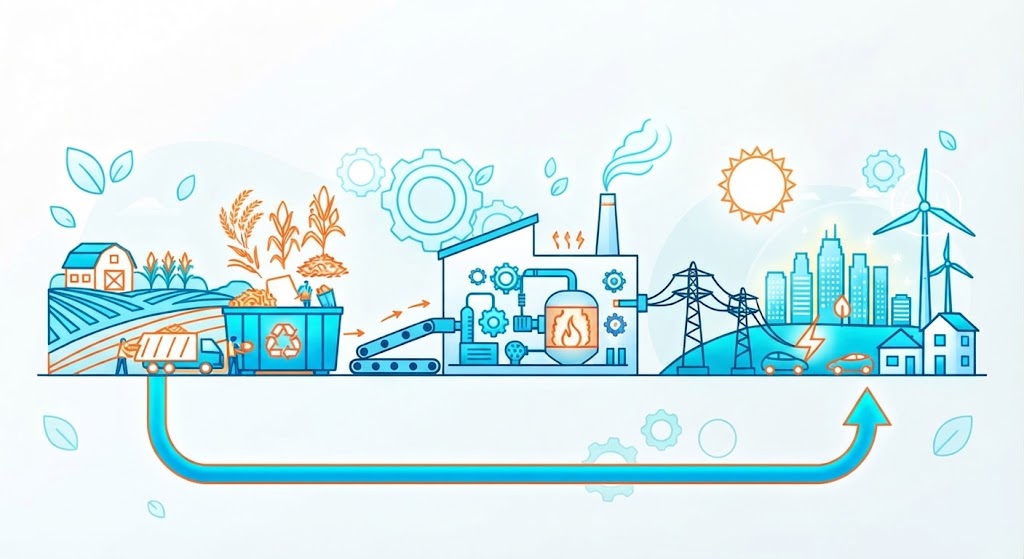
Biomass-to-energy systems can contribute to this approach. Agricultural residues can become fuel. Animal waste can produce biogas. Food waste can generate electricity. Some processing systems can also produce useful by-products, including organic fertilizers.
The result is a system in which the residue from one economic activity becomes an input for another. This can be particularly valuable in agricultural economies. Farmers may gain additional economic opportunities from residues that previously had little value, while local communities can benefit from electricity generated from locally available resources.
Rural Development and Energy Security
Biomass resources are often located close to rural communities and agricultural production areas. As a result, properly designed biomass projects can create economic activity throughout the supply chain, including collection, transportation, processing, plant operation and maintenance.
The IEA has identified potential benefits of sustainable bioenergy beyond emissions reduction, including employment opportunities, rural development and improved waste management. Local electricity generation can also contribute to energy security. Countries that depend heavily on imported fossil fuels may reduce part of their exposure to international fuel-price fluctuations by making better use of domestic agricultural and organic resources.
For developing economies, biomass can therefore become one component of a broader renewable-energy strategy that connects clean electricity, rural employment, waste management and local economic development.
Biomass Must Be Sustainable
Biomass should not automatically be considered clean simply because it is renewable. Its environmental performance depends on what material is used, where it comes from, how it is produced and how far it must be transported. Unsustainable harvesting of forests can contribute to deforestation and biodiversity loss. Some biomass supply chains can also generate significant lifecycle emissions.
This is why sustainability standards, monitoring, certification and lifecycle assessment are essential. The most environmentally responsible biomass projects should prioritize waste and residues rather than creating incentives for deforestation or converting valuable ecosystems into energy plantations.
A responsible biomass strategy should maximize the use of genuine waste materials while protecting forests, biodiversity, agricultural production and food security.
A Complement to Solar and Wind
Biomass does not necessarily have to compete with solar and wind power. It can complement them. Solar and wind generation varies according to weather conditions, time of day and season. Under suitable conditions, biomass and biogas power plants can provide more controllable electricity generation.
The IEA’s analysis of bioenergy power highlights the potential role of biomass in providing low-emissions flexibility alongside variable renewable energy sources such as solar and wind.
A diversified renewable-energy system can therefore combine solar, wind, hydropower, biomass and biogas, depending on a country’s natural resources, electricity demand and infrastructure.
An Opportunity for Agricultural Economies
Countries with substantial agricultural production have a particularly interesting opportunity to develop biomass energy. Rice husks, straw, sugarcane residues, corn residues, coconut residues and other agricultural by-products can become valuable energy resources when appropriate collection, transport and conversion systems are available.
Rather than burning agricultural residues in fields, farmers and local businesses can potentially supply them to biomass facilities. The resulting electricity can support rural industries, communities, agricultural processing and other productive activities.
The key is to establish efficient supply chains. Biomass is generally bulky and can be expensive to transport, meaning that projects work best when facilities are appropriately located near reliable sources of feedstock.
Myanmar’s Opportunity: Turning Wood Waste into Electricity
Myanmar also has an opportunity to develop biomass electricity by making better use of wood-processing residues.
Sawmills, furniture factories and other wood-processing businesses generate sawdust, wood chips, bark, off-cuts and other residues. With appropriate collection and processing systems, these materials can be used as feedstock for biomass boilers, gasification systems or other electricity-generation technologies.
The Food and Agriculture Organization of the United Nations (FAO) has identified forest residues and wood-processing residues as potential feedstocks for bioenergy production. For Myanmar, this approach could create additional economic value from materials that might otherwise be discarded or inefficiently burned.
The environmental dimension is particularly important. Myanmar’s biomass strategy should focus on using existing waste and residues rather than cutting additional trees for fuel. Using sawdust and other wood-processing by-products could reduce uncontrolled burning and waste disposal while creating a locally available renewable-energy resource.
This approach could also support small and medium-sized enterprises involved in wood processing, waste collection, transportation and energy production. However, strong sustainability standards are essential. Biomass plants should use verified and responsibly sourced residues and avoid creating incentives for illegal logging, deforestation or unsustainable harvesting.
If properly managed, Myanmar can protect its forests while turning wood-processing waste into useful electricity. This offers a practical example of how environmental protection and economic development can reinforce each other.
Building the Right Policy Framework
The development of biomass energy requires more than simply building power plants. Governments need to establish clear sustainability standards, improve waste-collection systems, encourage responsible private investment and support rural infrastructure.
Research and development can also improve conversion technologies, increase efficiency and reduce emissions. Energy planners should evaluate biomass projects across their entire lifecycle – from collection and transportation to processing, electricity generation and final emissions. Such assessments can help distinguish genuinely sustainable projects from those that merely shift environmental impacts from one stage to another.
Financial incentives and supportive regulations can also help establish markets for agricultural and industrial residues. At the same time, transparent standards can ensure that biomass development does not undermine forests, food production or biodiversity.
Conclusion: Turning Waste into Value
The future of biomass-to-electricity development should be guided by a straightforward principle: turn waste into value without creating new environmental problems.
When properly designed, biomass energy can be more than another source of renewable electricity. It can become part of a wider strategy connecting climate action, waste management, rural development, energy security and local economic activity. From farms to forests, and from communities to power plants, biomass offers a pathway for transforming materials once regarded as waste into useful energy.
For Myanmar and other agricultural economies, the opportunity is particularly relevant. Rice husks, agricultural residues, food waste, animal waste and wood-processing by-products represent resources that can potentially support both cleaner electricity and local economic development.
The challenge is to use these resources responsibly. The objective should not be to burn more biomass, but to manage waste better, recover its energy value and protect the natural resources on which future generations depend.
The transition from biomass waste to clean electricity therefore represents more than a technological change. It is an opportunity to rethink the relationship between waste, energy, the environment and economic development.
The central message is simple: what was once considered waste can, with the right technology and responsible management, become part of the clean-energy future.


