
By Moon Cherry K
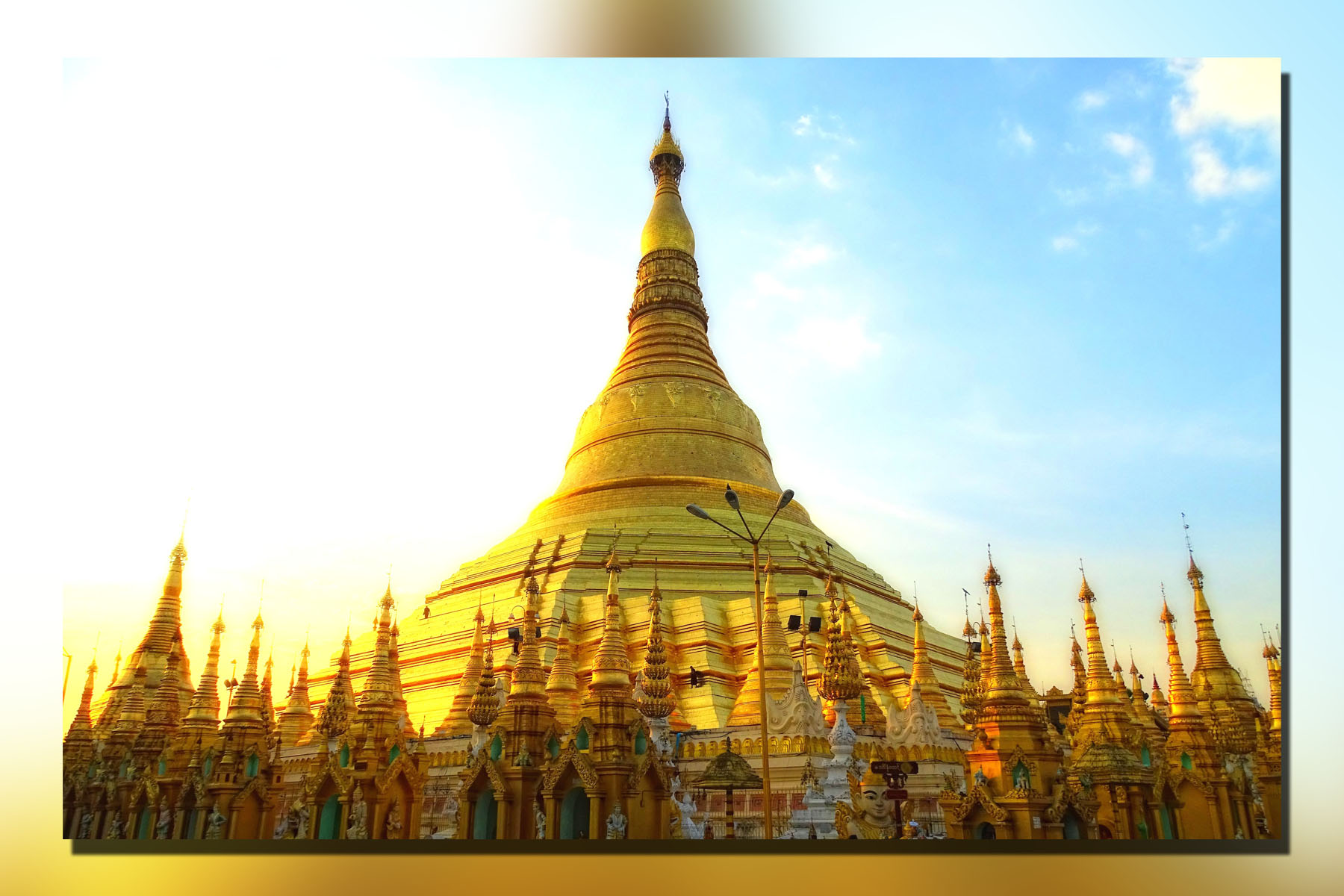
More than a golden landmark rising above Yangon, Shwedagon Pagoda is a living symbol of Myanmar’s faith, history, culture and spiritual identity. At sunrise, its golden surface catches the first light of day, transforming the sacred hilltop into a magnificent sight. For a first-time visitor, Shwedagon may appear to be an extraordinary monument. For generations of Myanmar people, however, it is something much deeper: a place of worship, memory, tradition and peace.
A Sacred Landmark
Shwedagon Pagoda stands on Singuttara Hill in Yangon and rises approximately 326 feet (99.36 metres) above its platform. Its present height was established during the reign of King Hsinbyushin in 1774. The official Shwedagon Pagoda website records that the site has been maintained and developed by successive rulers and devotees for centuries. Yet its importance cannot be measured by its height, gold or jewels alone. Its greatest significance lies in the sacred traditions and stories preserved around it.
According to Buddhist tradition, Shwedagon enshrines relics associated with the four Buddhas of the present age: eight strands of hair of Gautama Buddha, the staff of Kakusandha Buddha, the water filter of Konagamana Buddha and a piece of the robe of Kassapa Buddha. Because of these four sacred relics, the pagoda is traditionally revered as the Shwedagon Pagoda of the Four Sacred Relics.
A Legend of Two Brothers
One of the best-known traditions tells of two merchant brothers, Tapussa and Bhallika. After encountering the Buddha soon after his Enlightenment, the brothers offered him food. According to the Shwedagon tradition, the Buddha gave them eight strands of his hair. They carried the sacred relics back to their homeland, where King Okkalapa and the people of Ukkalāpa received and venerated them. The relics were eventually enshrined on Singuttara Hill together with relics associated with the three previous Buddhas.
Whether approached through faith, history or legend, this story helps explain why Shwedagon is more than an architectural masterpiece. It is a place where generations have connected the past with the present.
Walking the Sacred Platform
For Buddhist devotees, a visit to Shwedagon is not simply sightseeing; it is an act of devotion. Visitors traditionally walk clockwise around the pagoda, pausing at shrines, Buddha images and planetary posts to pray and make offerings. The four main directional shrines are associated with Kakusandha, Konagamana, Kassapa and Gautama Buddha.
Flowers, candles, incense and oil lamps are common offerings. Families may come together, elderly people may sit peacefully in prayer, and young visitors may learn traditions from their parents and grandparents. In the early morning or at sunset, when the light softens and the heat begins to fade, the atmosphere can feel especially peaceful. The gentle sound of bells, footsteps and quiet prayers creates a unique sense of living spirituality.
Wonders Beyond the Main Stupa
The great golden stupa naturally draws the eye, but the Shwedagon complex contains many other places of religious and cultural interest. The official Shwedagon website identifies a group known as the “Nine Wonders”, including the Ruby-Eyed Buddha, the Vijja-Zawgyi Stupa, the Queen Shin Sawbu Buddha Image, the Hair Relic Well Pavilion, Bo Bo Aung’s shrine, the Shin Mahti Buddha Image, the Kakusandha Buddha Image and other revered sites.
These places add another dimension to a visit. They remind us that Shwedagon is not a single monument but a vast sacred landscape filled with images, pavilions, shrines, inscriptions and stories. Among its historical treasures are the Dhammaceti Stone Inscriptions, erected in 1485 in Mon, Myanmar, and Pali. They provide valuable evidence about the history and preservation of Shwedagon and its sacred traditions.
A Night of Light and Devotion
Shwedagon becomes particularly vibrant during Myanmar’s traditional religious festivals. Tazaungmone, in particular, is associated with robe-offering traditions and the famous Golden Lotus Robe Weaving Contest. According to the pagoda’s official records, the heritage contest began in 1941. Weaving groups gather in a traditional ceremony, and the completed robes are offered to Buddha images before dawn on the Full Moon Day.
During festival occasions, the pagoda platform can glow with candlelight and oil lamps as devotees gather to pray, make offerings and share merit. The scene combines religious devotion with community participation, allowing visitors to experience a living tradition rather than simply observe an ancient monument.
Where the Heart Finds Peace
Perhaps the greatest attraction of Shwedagon cannot be captured by a camera. It is the sense of peace that many people experience there. Amid the movement of a busy city, the pagoda provides a place to pause, pray and reflect. Devotees come to offer flowers and lamps, meditate, make donations and express gratitude. For many Buddhists, these acts are connected with generosity, mindfulness and the cultivation of a calm mind.
The meaning of Shwedagon also extends beyond religion. Its history reflects the work of kings, queens, monks, craftsmen, donors and ordinary people who have helped preserve it across generations. Its presence in Yangon connects the modern city with Myanmar’s cultural memory.
A Golden Symbol of Home
As evening falls, the golden stupa glows against the changing sky, and the city gradually comes alive with lights. At that moment, Shwedagon seems to bring together the many layers of Myanmar: faith and history, legend and living tradition, devotion and community.
For travellers, Shwedagon Pagoda may become one of the most memorable sights of a journey through Myanmar. For those who hold it sacred, it represents something more enduring – a connection to faith, family, heritage and home. Its true beauty is not simply the gold that shines in the sunlight, but the generations of people who have prayed, offered, remembered and found peace beneath its golden glow. Shwedagon is therefore more than a landmark. It is a living heritage site and a spiritual symbol of Myanmar – a golden heart that continues to shine at the centre of Yangon.


