
“Healthy forests support healthy people. By using nature wisely today, we protect our future tomorrow.”
By Dr Zaw (Sli)
Every Meal Matters
Every morning, families across Myanmar prepare meals that reflect the country’s rich natural heritage. Many traditional Myanmar dishes feature non-timber forest products, including bamboo shoots, mushrooms, wild fruits, and edible leaves gathered from nearby forests. For generations, these natural foods have been part of Myanmar’s culture and have supported the livelihoods of many rural communities.
When these resources are harvested carefully and responsibly, they can continue to benefit both people and nature. However, population growth, migration, changing land use, expanding markets, increasing commercial demand, illegal activities, and the growing impacts of climate change are creating new pressures on Myanmar’s forests. These challenges highlight the importance of managing forest resources sustainably for present and future generations. This raises an important question for all of us, especially young people:
“How can we continue to enjoy the gifts of nature while ensuring that our forests remain healthy for future generations?”
Many people recognize illegal logging and forest fires as major threats to forests. Yet another challenge receives far less attention: the illegal and unsustainable exploitation of Myanmar’s forest resources. Wildlife is illegally hunted and traded for meat, traditional medicine, pets, and commercial profit, while valuable forest products are harvested beyond sustainable levels to meet growing market demand. Illegal trade, habitat destruction, weak enforcement, poverty, and increasing consumer demand all contribute to the loss of biodiversity and the degradation of forest ecosystems. Addressing these challenges requires stronger law enforcement, public awareness, sustainable livelihoods, and responsible consumer choices. Protecting forests does not always require expensive technology or large development projects. It often begins with informed daily choices, responsible consumption, and respect for nature.
Myanmar’s Rich Forest Heritage
Myanmar is one of Southeast Asia’s most biologically diverse countries. From the snow-covered mountains of Kachin to the tropical forests of Tanintharyi, the country is home to thousands of plant and animal species.
Forests provide much more than timber. They supply many non-timber forest products, including:
• Bamboo shoots
• Forest mushrooms
• Wild fruits
• Honey
• Edible ferns
• Medicinal plants
• Natural spices
These products contribute to household nutrition and income, particularly in rural and Indigenous communities. For many families, carefully managed forest harvesting remains an important part of daily life and local traditions.
Myanmar’s forests also provide habitats for elephants, deer, monkeys, birds, pangolins, and many other wildlife species. Healthy forests support clean water, fertile soil, climate regulation, and biodiversity that benefit the entire nation.
When Sustainable Use Becomes Unsustainable
For many years, local communities collected forest products mainly for family use or small local markets. In many places, this traditional practice allowed forests enough time to regenerate naturally.
Today, however, the situation has changed.
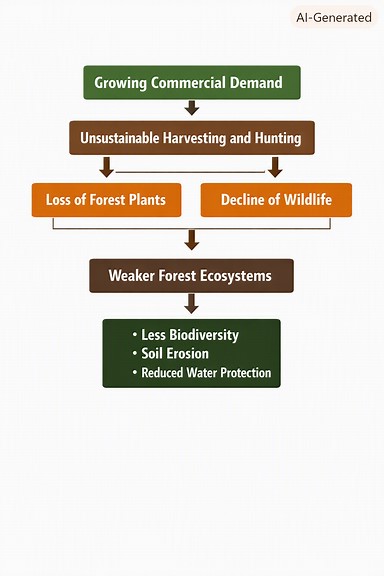
Growing urban populations, higher consumer demand, improved transportation, and commercial trading have increased pressure on natural forests. In some areas, forest products are harvested faster than nature can replace them.
When harvesting exceeds the forest’s natural ability to recover, sustainability is lost.
For example, bamboo produces many young shoots during the rainy season. Harvesting a limited number of edible shoots for household use can be sustainable and has long been part of Myanmar’s traditional way of life. However, when large numbers of young bamboo shoots are harvested every year for commercial food processing, especially to produce sour bamboo shoots that are transported and sold across the country as regional products, the pressure on natural bamboo forests increases. Removing too many young shoots reduces the number that can grow into mature bamboo culms, which may weaken the natural regeneration of bamboo stands over time. If unsustainable harvesting continues together with increasing market demand, land-use change, and inadequate forest management, some natural bamboo forests could gradually decline or disappear from certain areas. Promoting sustainable bamboo cultivation, responsible harvesting practices, and bamboo plantations can help protect natural forests while supporting local livelihoods and businesses. Similarly, excessive collection of mushrooms, medicinal plants, and wild fruits may reduce the natural regeneration of important forest species.
The greatest concern is not traditional use, but unsustainable commercial exploitation.
Why Healthy Forests Matter
Healthy forests provide many environmental services that people often take for granted.
Bamboo helps stabilize hillsides, reduce soil erosion, conserve water, and provide shelter for many animals. Forest trees protect watersheds, improve air quality, and store carbon that helps reduce climate change.
When forests become degraded:
• Soil erosion increases.
• Rivers and streams lose natural protection.
• Wildlife habitats become smaller.
• Biodiversity declines.
• Communities become more vulnerable to floods and droughts.
The loss of even a few important species can affect the balance of an entire ecosystem.
Protecting forests means protecting the many natural systems that support agriculture, clean water, and human well-being.
Wildlife Conservation Benefits Everyone
Wild animals play important roles in maintaining healthy ecosystems. Many birds and mammals disperse seeds that help forests regenerate naturally. Others control insect populations or contribute to the balance of food webs.
Unfortunately, illegal hunting and wildlife trafficking continue to threaten many species around the world. Protected animals, including pangolins, have experienced serious population declines because of illegal hunting and trade.
Reducing demand for illegally hunted wild meat helps protect biodiversity and supports national conservation efforts. Protecting wildlife is not only about saving individual species. It is about maintaining healthy ecosystems that support future generations.
Healthy Food Choices and Public Health
Choosing sustainable food is also beneficial for human health.
Scientific studies show that some diseases can spread between animals and humans. Good food safety practices and responsible wildlife management help reduce these risks.
Improper handling or processing of certain forest foods may also create health concerns. For example, bamboo shoots should be prepared hygienically and cooked properly before consumption. Likewise, some wild plants require careful preparation because they may naturally contain substances that are unsafe if consumed incorrectly.
Whenever possible, families can choose safely produced agricultural products, farm-grown vegetables, and legally sourced foods that meet food safety standards.
Healthy diets support both healthy people and healthy environments.
Laws and Community Participation
Myanmar has introduced important environmental legislation to conserve forests and biodiversity, including the Environmental Conservation Law (2012), the Forest Law (2018), and the Biodiversity and Protected Areas Conservation Law (2018).
These laws help protect forests, wildlife, and protected areas.
However, laws alone cannot achieve conservation.
Successful forest protection also depends on:
• Strong law enforcement
• Community participation
• Sustainable forest management
• Public awareness
• Responsible businesses
• Environmental education
When governments, communities, schools, and businesses work together, conservation becomes much more effective.
Learning from International Experience
Many countries have shown that sustainable development and forest conservation can go hand in hand.
Community forestry allows local people to manage forest resources responsibly while improving their livelihoods.
Commercial bamboo plantations reduce pressure on natural bamboo forests.
Environmental education encourages students to understand biodiversity, climate change, and sustainable lifestyles.
School eco-clubs, tree-planting campaigns, recycling programmes, and biodiversity education have helped young people become active environmental stewards in many countries.
Myanmar can continue strengthening similar initiatives while respecting its own traditions and local knowledge.
Environmental education
Education is one of the most effective long-term approaches to environmental conservation.
When students understand how forests support clean water, agriculture, biodiversity, and public health, they become informed citizens who make responsible decisions.
Teachers, parents, and community leaders all have important roles in encouraging environmental responsibility.
Simple actions can make a meaningful difference:
• Choose sustainably produced food whenever possible.
• Avoid purchasing illegally hunted wildlife.
• Reduce unnecessary food waste.
• Support community forestry programmes.
• Join tree-planting and conservation activities.
• Share environmental knowledge with others.
Small actions taken by millions of people create lasting national change.
Protecting Nature Starts with Us
Myanmar’s forests are among the nation’s greatest treasures. They provide food, clean water, livelihoods, wildlife habitats, and protection against climate change. Conserving these resources does not mean abandoning our traditions. Instead, it means using nature wisely and responsibly so that future generations can continue to enjoy its benefits.
Every family, every school, every community, and every citizen has a role to play.
As our national commitment reminds us:
“Keep Myanmar Clean and Green: Protect Nature, Protect Our Future.”
By making informed food choices, respecting wildlife, supporting sustainable forestry, and educating the next generation, we can help ensure that Myanmar’s forests remain healthy, diverse, and productive for many years to come.
Together, let us build a greener, healthier, and more sustainable Myanmar for present and future generations.


