
By Min Min Zan
To truly understand the depth of Ko Kyaw Kha’s recent wounds, one must return to the beginning of his relationship with his niece. To the outside world, she was merely his younger sister’s daughter. But to him, she was the daughter he never had – the child into whom he poured his time, knowledge, and eventually, almost all of his trust.
When she was a young child, she spent every summer vacation in his town. While other children played, she sat beside him, eager to learn English. She possessed a natural curiosity and a sincere desire to improve. By high school, she had already mastered complex grammar texts. He believed education was one of life’s greatest gifts, and he felt privileged to guide someone who truly valued it.
However, life rarely follows a predictable path. After her matriculation examination, her parents separated, and her grandparents passed away. Her visits became less frequent. Years passed, and when she was around twenty-four, she returned to his daily life. His health was declining, and he needed assistance. Unplanned, the young girl who had once been his student gradually became the person who shared his home.
Neither could have imagined that this arrangement would last for over a decade. Those years brought unparalleled peace. The once-empty house became organized, and the difficult solitude of an elderly man was replaced by a profound sense of comfort. Gradually, she became involved in his English tuition classes. Recognizing her talent for teaching, he trained her seriously. She developed into a capable, respected English teacher. Seeing her stand confidently in front of a classroom filled him with pride. In his heart, he believed he had not merely helped his niece find a career, but had helped his daughter find her place in life.
For nearly ten years, their relationship seemed unbreakable. He trusted her more than anyone else — a trust that extended into the most practical aspects of his life. At the Myanmar Economic Bank, he had savings collected over many years. Originally, only he had withdrawal authority, but trusting her completely, he arranged the account so she could access it legally. His reasoning was simple: if something unexpected happened to him, he wanted her to handle everything easily. This was not a financial decision, but an expression of absolute trust built through countless ordinary days.
But human relationships can change quietly. His niece began spending more time on her phone, having long, private conversations. Whenever he was nearby, she would move to another part of the house. Initially, he tried not to overthink it. Yet, a small question began to form: had someone entered her life? After almost ten years of depending on her, he desperately wanted to believe that nothing had changed.
Two months ago, he decided to speak with her openly. He approached her not with anger, but with a deep desire for honesty. She admitted she had become close to a man but quickly reassured him. She claimed it was only a casual relationship, that she had no intention of marrying, and that she had chosen someone from another town to avoid local gossip. He listened quietly and accepted her words — not because he had proof, but because trust compels us to believe the people we love.
Then came 24 July 2026, a day he believes he will never forget. Around half past twelve, while resting in his classroom, his niece casually mentioned she needed to go out. She appeared perfectly calm. Yet, driven by lingering doubts, a feeling of unease washed over him. After she left, he looked through the classroom door and saw her hurriedly climbing into a hired three-wheeled taxi. A hired taxi implied a longer journey. A question formed: where was she really going?
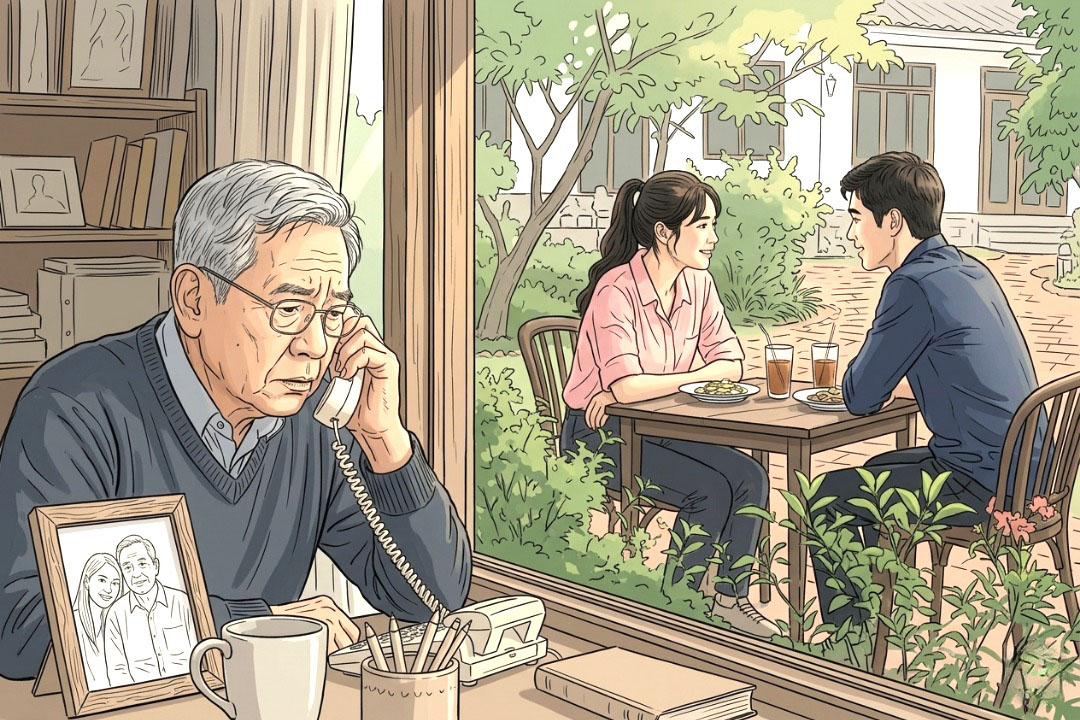
Thirty minutes later, he called one of her close friends, who confirmed she was still at home. The painful certainty struck him: she had gone alone, and she had lied. With a heavy heart, he called her. “Where are you now?” he asked. “I am at Natural Life,” she replied, naming a restaurant outside town. “Who are you with?” “I am with Su Myat,” she answered.
Then Ko Kyaw Kha spoke, his voice trembling between disappointment and disbelief. “Please do not lie to me. I have already called Su Myat. She is at home. Tell me the truth. Are you with him?” After a short silence, she simply said, “Yes.” That single word created a silence inside him louder than any argument.
At that moment, he did not feel anger that she had met someone; he understood she was an adult with the right to choose her path. What wounded him deeply was the realization that the person he trusted most had chosen to deceive him when he asked for the truth. The pain did not stem from a broken relationship, but from broken trust. He had spent over a decade treating her as his daughter, sharing his knowledge, his home, and his hopes. He had given her his complete trust, and in that moment, something precious within him was irreparably damaged.
Looking back on those ten years, Ko Kyaw Kha refuses to erase them. The happiness, achievements, and bonds were real. He still cherishes the memories of the eager student and the proud teacher. However, he has learned a painful truth: no human being can completely belong to another. People grow, change, and create their own journeys. The greatest wisdom in life is learning to love deeply while preparing our hearts for change.
After everything that happened, Ko Kyaw Kha found himself standing at an unexpected crossroads. For years, he had imagined his later years spent peacefully with someone he could trust completely. He never expected perfection, only that their deep bond would endure. But life teaches lessons in unexpected ways; the greatest disappointments often come from those who occupied the most special places in our hearts.
Yet, as time passed, he began to understand something vital. The years they spent together were not a mistake. A teacher does not regret teaching simply because a student chooses a different path. The deepest form of love is not possession, but the ability to accept that those we love have their own journeys. He had always believed that when he became weak, she would be beside him. Now, he understands that no one can guarantee they will remain exactly where we expect them to be. Human beings are travellers who walk beside us for a certain distance before sometimes taking a different road.
Accepting this reality is painful, but it is a form of wisdom. Ko Kyaw Kha does not want to remember his niece only through this painful incident, as that would be unfair to the many beautiful years they shared. He has also learned that love without boundaries can become dependence, and trust without balance can create suffering. One should love sincerely but never forget how to stand independently.
As he grows older, Ko Kyaw Kha understands that the final chapter of life cannot be written by placing all hope in another person. Peace and strength must come from within. He has decided not to spend his remaining years looking backwards with anger or allowing resentment to define a relationship that once brought him immense joy. Instead, he chooses to be grateful for what was real and to continue living with dignity.
Perhaps the greatest challenge in life is not losing someone, but discovering how to continue after losing the future we once imagined with them. For Ko Kyaw Kha, the future he planned has changed. But a blank page is not the end of a story; it is an invitation to begin again. He still has knowledge to share, students to teach, and kindness to offer. The road ahead may be quieter and require greater inner strength, but it is still his road. With acceptance rather than bitterness, Ko Kyaw Kha begins writing a new ending.
(This is the Continuation of the article titled “When A Genuine Trust Meets Human Nature”- 9.6.2026)


