
By Dr Zaw (Sli)
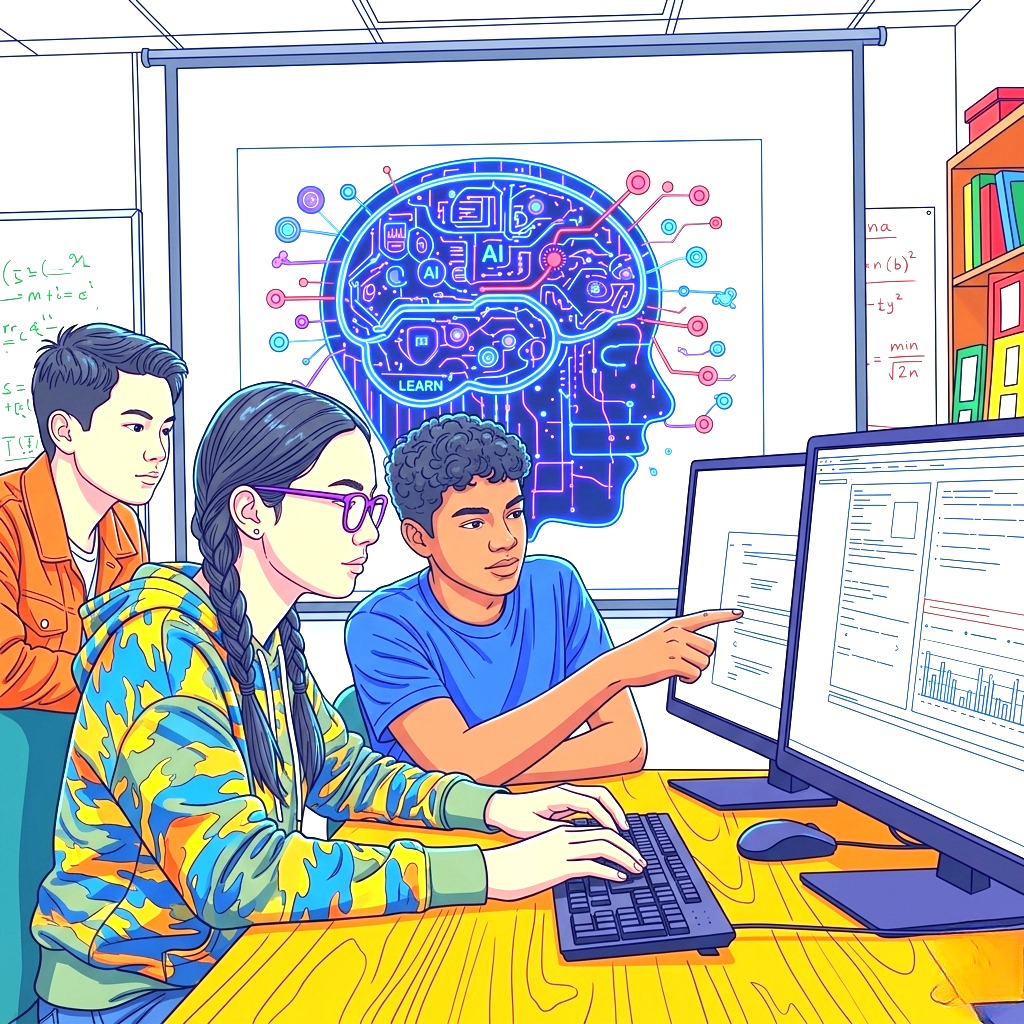
A RTIFICIAL Intelligence (AI) is transforming education in unprecedented ways. Intelligent learning platforms, AI-assisted writing tools, language translation systems, virtual tutors, coding assistants, and research support applications now enable students, teachers, and researchers to access knowledge more efficiently than ever before. When used responsibly, these technologies enrich learning, encourage creativity, improve productivity, and promote lifelong education.
Rather than replacing human intelligence, AI should be regarded as an educational partner that enhances learning, supports informed decision-making, and inspires innovation. Its greatest value lies in helping people learn more effectively while allowing teachers and learners to focus on creativity, critical thinking, and problem-solving.
However, every technological advancement also brings new responsibilities. As AI becomes increasingly integrated into education, research, business, healthcare, government, and many other sectors, concerns about its misuse continue to grow worldwide. While AI offers significant educational opportunities, excessive dependence on it may weaken meaningful learning and academic development.
Education is founded on understanding, curiosity, independent thinking, and ethical behaviour. These values are compromised when learners rely on AI to complete assignments without understanding the subject matter, present AI-generated work as their own, fabricate or manipulate research data, or avoid independent reasoning. Such practices undermine academic integrity, weaken critical thinking, reduce originality, and gradually erode the values of honesty, responsibility, and intellectual independence that education seeks to cultivate.
Protecting Intellectual Property in the Digital Age
One of today’s most significant concerns is the protection of intellectual property. Every academic work, whether a book, journal article, research report, thesis, artistic creation, software programme, or digital publication, is the result of human creativity, knowledge, and intellectual effort.
Presenting another person’s words, ideas, images, data, computer programmes, or creative work without proper acknowledgement constitutes plagiarism and may also violate intellectual property rights. Although plagiarism has long existed, advances in AI have made it easier to generate sophisticated content that may obscure original sources if users fail to provide proper citation and attribution.
Students, researchers, and professionals should understand that AI does not remove their responsibility to respect copyright, authorship, academic ownership, and intellectual property. AI can make many tasks faster and more efficient, but its convenience should never become an excuse for compromising ethical standards. Academic qualifications should reflect genuine learning, independent analysis, original thinking, and authentic achievement rather than technological shortcuts.
Transparency and Responsible AI Use
Around the world, many educational institutions now encourage or require transparency regarding AI-assisted work. When AI makes substantial contributions to drafting, editing, coding, data analysis, image generation, or content creation, students and researchers should follow their institutional policies and recognized academic referencing guidelines regarding disclosure.
Transparency strengthens trust among learners, teachers, researchers, publishers, employers, and society. It also helps preserve the credibility of academic qualifications and reinforces confidence in scholarly work.
At the same time, users should recognize that AI systems are not always accurate, objective, or free from bias. AI may occasionally produce outdated information, inaccurate responses, fabricated references, or content influenced by biases within training data. For this reason, human judgement, careful verification, and critical thinking should always guide the use of AI. AI should support human decision-making – not replace it.
Principles for Responsible AI Use
A few simple and practical principles should guide the responsible use of AI. These principles help ensure that AI supports ethical learning, innovation, and responsible decision-making.
Appropriate Uses of Artificial Intelligence (Do’s)
Use AI to deepen understanding of complex concepts rather than replace personal learning.
Use AI to generate ideas, organize information, improve language, receive constructive feedback, or assist with coding and data analysis before producing original work.
Verify AI-generated information using reliable academic publications and trusted sources, as AI systems may occasionally produce inaccurate or fabricated information.
Cite and acknowledge AI use whenever required by institutional policies or recognized academic referencing guidelines.
Take personal responsibility for every assignment, report, research paper, presentation, thesis, or publication submitted under one’s own name.
Protect confidential information, personal data, and sensitive research materials when using AI systems.
Use AI to strengthen creativity, critical thinking, communication, collaboration, and sound judgement – not to replace them.
Practices to Avoid (Don’ts)
Do not submit AI-generated essays, reports, research papers, dissertations, or projects as entirely original personal work.
Do not use AI to plagiarize, fabricate evidence, manipulate research data, falsify research findings, or generate false academic references.
Do not use AI during examinations or assessments where institutional regulations prohibit its use.
Do not present AI-generated ideas, images, software, or research outputs without proper acknowledgement whenever disclosure is required.
Do not allow AI to replace independent reasoning, personal reflection, ethical judgement, or informed decision-making.
Do not misuse AI to spread misinformation, create deceptive content, violate intellectual property rights, or engage in academic misconduct.
These principles remind us that the ethical challenge lies not in the technology itself but in the way it is used. Like books, calculators, computers, and the Internet before it, AI is fundamentally a tool. It can either support meaningful education or facilitate academic dishonesty depending on human choices. Ultimately, integrity remains the defining factor
.
Building Responsible AI Literacy in Myanmar
As Myanmar continues to strengthen competency-based education and digital learning, responsible AI literacy should gradually become an integral component of educational reform. Students need not only digital competence but also ethical competence.
Teachers play a vital role in introducing learners to internationally recognised principles of academic honesty, intellectual property protection, responsible citation, copyright awareness, digital citizenship, and ethical AI use from the earliest stages of education. Such knowledge will prepare future graduates to participate confidently in the global academic community while preserving Myanmar’s enduring cultural values of honesty, responsibility, respect, and accountability.
Educational institutions should also establish clear AI policies, provide guidance on responsible AI use, promote digital literacy, and encourage learners to think critically about AI-generated information. In doing so, education can embrace technological innovation while safeguarding academic standards and public trust.
A Shared Responsibility for the Future
The success of education in the age of AI should not be measured solely by how effectively technology is used, but by how wisely and ethically it is applied. AI may increase efficiency and expand access to knowledge, yet only integrity transforms knowledge into wisdom and innovation into lasting social benefit.
As AI continues to reshape education and society, honesty, accountability, respect for intellectual property, academic integrity, and responsible human judgement will remain the enduring foundations of educational excellence, scientific progress, and sustainable national development.
Artificial Intelligence should strengthen human intelligence – not replace human integrity. AI can support learning, improve productivity, and inspire innovation, but it must always be guided by honesty, responsibility, transparency, and respect for ethical values. Academic certificates recognize educational achievement, but integrity earns public trust. By combining knowledge with character, education can ensure that technology remains a force for human progress while nurturing responsible, capable, and compassionate citizens for the future.


