
By Thin Hlaing Hmwe
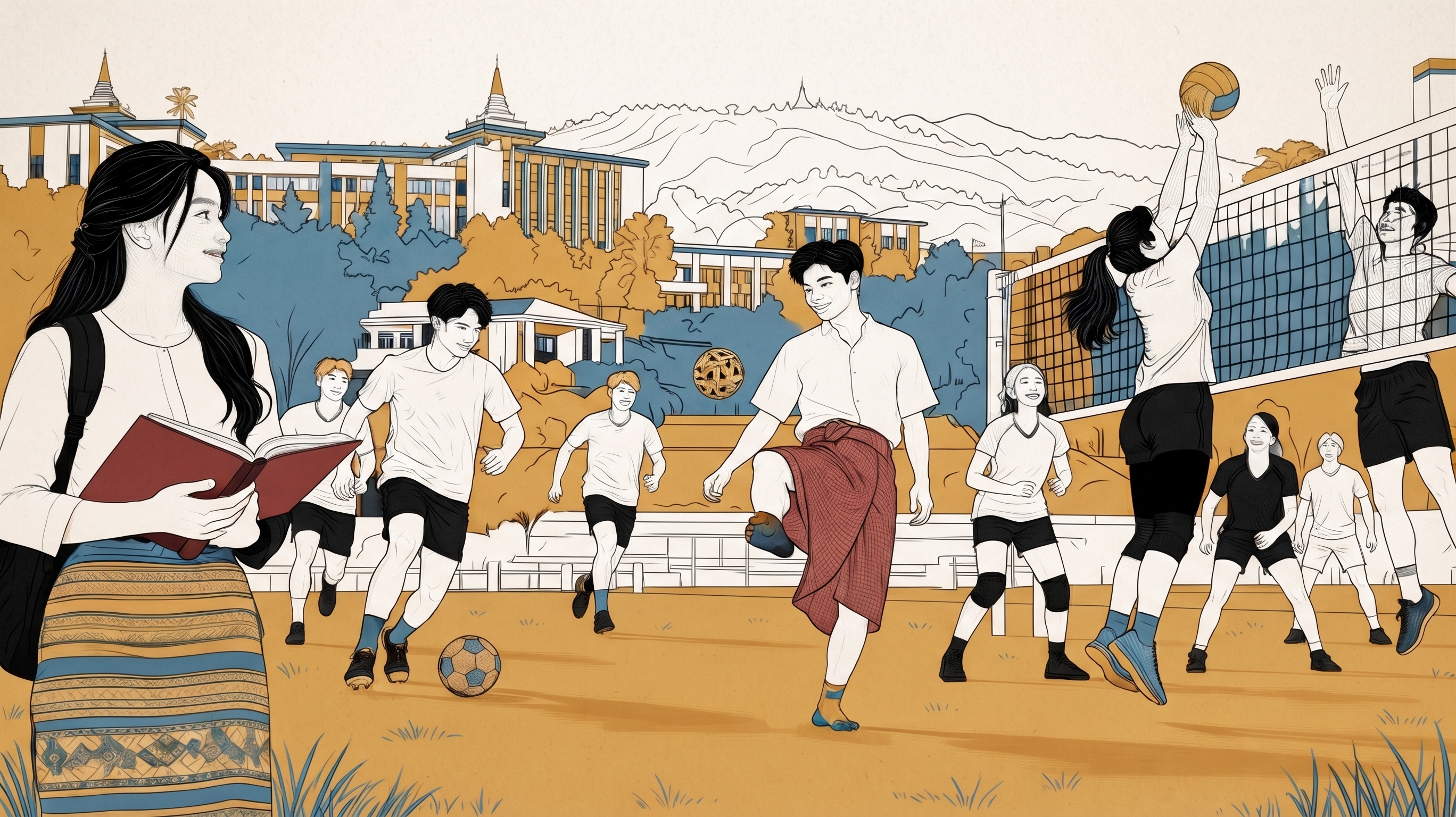
A student who spends the day in a classroom and the evening on a playing field is learning more than facts from textbooks or skills from a game. The classroom encourages curiosity, patience and clear thinking; the playing field teaches discipline, cooperation and courage. Together, these experiences help young people grow into capable, healthy and responsible citizens.
This is why students should strive to excel not only in education but also in sports. Academic achievement is important, but it is only one part of a young person’s development. The country needs a new generation that is knowledgeable, physically strong, morally responsible, and able to work with others. By nurturing the five strengths – physical, intellectual, moral, social and moral character – young people can become well-rounded individuals whom the State and the community can rely on.
Learning beyond the classroom
Today’s students will become tomorrow’s leaders, professionals and public servants. Their education gives them the knowledge and skills to contribute to the country’s development. Yet lessons alone cannot prepare them for every challenge they may face. Young people also need good health, self-discipline, perseverance and the ability to cooperate with people from different backgrounds.
For example, a student preparing for an examination learns to plan, concentrate and keep working towards a goal. An athlete training for a competition faces similar demands: regular practice, patience when progress is slow, and the determination to improve after a setback. These habits reinforce one another. A student who learns to manage time for both study and training may become more organized, while an athlete who practises discipline on the field may carry that focus into the classroom.
Sport can also offer an important lesson in resilience. A team may lose a match despite careful preparation, or an individual may fail to reach a personal target. Such moments can be disappointing, but they also teach students to examine what went wrong, accept constructive advice and try again. Those are valuable skills not only in sport, but also in education, work and life.
Health is a foundation for achievement
Good health is essential to sustained learning and active participation in society. If young people neglect their physical well-being, their ability to study, work and serve others may be affected. Regular physical activity helps students maintain fitness and can provide a healthy balance to long hours spent reading or using digital devices.
Not every student needs to become a competitive athlete. Walking, jogging, playing a team game or taking part in regular exercise can all contribute to a healthier lifestyle. Schools and universities can encourage students to find activities that suit their interests and abilities. The key is to make physical activity a regular part of life rather than something undertaken only when a major competition approaches.
Sports can also help students learn to care for their health responsibly. Training encourages them to understand the value of preparation, rest, and consistent effort. A student who warms up before playing, follows a training routine and respects the limits of the body is learning habits that can support lifelong well-being.
Youth and sport, like youth and education, are therefore closely connected. A healthy body can support a focused mind, while knowledge helps students make informed choices about their health and performance.
A platform for unity and experience
The 2025-2026 Academic Year Inter-University Sports Competition, organized under the guidance of the State Government by the Ministry of Science and Technology, provides an opportunity to put these ideas into practice. The competition is being held across eight regional zones: Sagaing, Nay Pyi Taw, Magway, Mandalay, Mon, Yangon, Shan and Ayeyawady.
From 25 October to 4 November, student athletes are competing in six events – badminton, table tennis, Chinlone, futsal, volleyball and football – at Naypyitaw State Polytechnic University and the Government Technical Institute in Nay Pyi Taw. A total of 392 male and female student athletes from various universities are participating.
The scale and variety of the competition matter. Individual events such as badminton and table tennis demand concentration, coordination and self-control. Players must remain alert, respond quickly and keep their composure during a close match. Team events such as futsal, volleyball and football require communication, trust and a shared understanding of the team’s aims. Chinlone, meanwhile, gives participants an opportunity to showcase skill, control and coordination through a sport with a distinctive cultural character.
Each event offers lessons that extend beyond the score. A volleyball player who encourages teammates after a missed serve is practising respect and solidarity. A footballer who passes the ball to a better-positioned teammate is putting the team’s success ahead of personal recognition. A badminton player who accepts an official’s decision calmly demonstrates respect for rules and fair play.
Competitions at university, regional-zone and central levels also bring students together. Participants from different parts of the country can meet, exchange experiences and form friendships. A student from one region may learn how another university organizes its training, while teammates and opponents may discover common interests despite coming from different communities. These encounters can broaden young people’s perspectives and strengthen mutual understanding.
Teamwork, character and patriotism
Sport is an effective way to develop social strength because success often depends on how well people work together. In a team, each player has a role, and one person’s effort can support the whole group. Students learn to listen, communicate, share responsibility and encourage others. These abilities are valuable in classrooms, workplaces and communities, where progress also depends on cooperation.
Sport can also build moral strength and character. Rules create a shared standard for players, while fair play teaches them to compete honestly. Students learn that winning should not come at the expense of respect, and that opponents deserve recognition for their efforts. A gracious winner and a determined loser both show strength of character.
These values can deepen a young person’s sense of responsibility towards the wider community. When students represent their university or region, they are not playing only for themselves. They carry the hopes of fellow students, teachers and supporters. Their conduct – whether in victory or defeat – can bring pride to those they represent. That sense of belonging can nurture patriotism and inspire young people to work for the honour and progress of the nation and its people.
Striving for balanced success
The Inter-University Sports Competition is more than a series of matches. It is an investment in students’ development and a reminder that education and physical growth should advance together. The competition gives
young people a chance to test their abilities, learn from experience, and build relationships across regions. It also highlights the importance of creating opportunities for both male and female students to participate and demonstrate their talents.
Students should therefore make purposeful efforts in both their studies and sports. This does not mean that every student must achieve the same results or pursue the same event. Each young person has different interests and abilities. Rather, it means valuing learning and health, setting achievable goals, practising consistently and supporting others along the way.
Families, teachers and universities can help by encouraging students to balance their commitments and by recognizing effort as well as achievement. A student who improves through steady practice deserves encouragement, even if they do not win a medal. Similarly, an athlete who takes responsibility for schoolwork is showing that dedication in one area need not come at the cost of another.
The future will require young people who can think clearly, act responsibly, stay physically fit and work constructively with others. By excelling in education and sports, students can develop the five strengths needed to meet that challenge. With knowledge in their minds, health in their bodies and discipline and goodwill in their character, they can become well-rounded individuals and reliable human resources for the country’s future development.


