
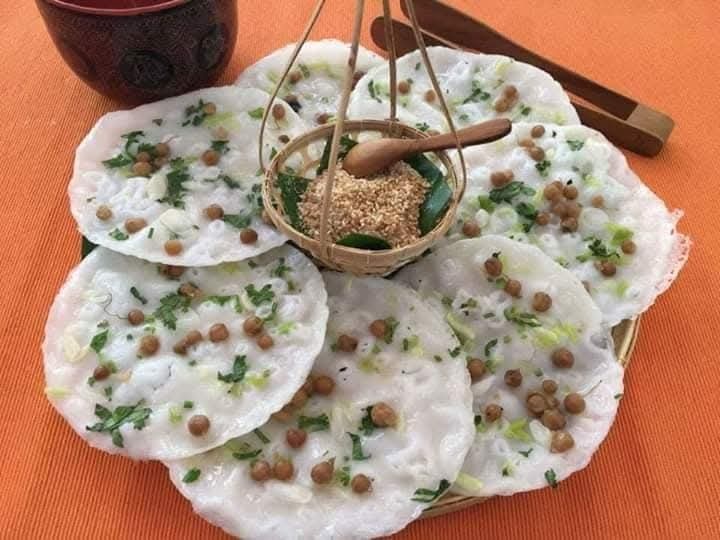
Mont Pya Thalet
(Myanmar Honeycomb Rice Pancake)
WHETHER enjoyed during an early-morning stroll or shared over an evening cup of tea, Mont Pyar Thalet, with its enticing aroma and wisps of steam rising from a hot clay pot, is one of Myanmar’s most irresistible traditional snacks.
The snack gets its name from the numerous tiny air pockets resembling a honeycomb that form across its surface. With a lightly crispy bottom and a soft, tender centre, this traditional rice pancake can be enjoyed in either savoury or sweet variations, according to personal preference.
There are two delicious versions of Mont Pya Thalet to choose from.
The first is the savoury and spicy version, which is the most common and popular variety. It combines the rich, mellow flavour of boiled peas with the fresh aroma of spring onions and coriander, fragrant fried onion oil and a spicy kick of chilli powder. For those who enjoy a little tanginess, thinly sliced tomatoes are added to create a delightful blend of flavours without making the snack overly rich.
The second is the sweet version. A generous drizzle of thick palm jaggery syrup, accompanied by fragrant grated coconut and a sprinkling of roasted, crushed sesame seeds, blends beautifully with the mildly tangy rice aroma of the pancake, turning it into a truly distinctive sweet treat.
Now, let’s explore the ingredients needed and the step-by-step process for making this delightful traditional snack.
Ingredients
The following quantities are suitable for preparing Mont Pya Thalet at home using a small frying pan.
For preparing the batter
• Coarse rice flour (or raw rice flour) – 2 cups
• Cooked rice, mashed until soft – 2 tablespoons (to give the pancake a tender texture)
• Yeast – ½ teaspoon (or a small amount of baking soda)
• Salt – ½ teaspoon
• Warm water – as needed (to achieve a batter of the right consistency)
Toppings for the savoury version
• Boiled yellow peas – 1 cup
• Spring onions, finely chopped
• Fresh coriander, chopped
• Tomatoes, thinly sliced
• Roasted chilli powder
• Fried onion oil
• A little salt and monosodium glutamate (MSG), to taste
Toppings for the sweet version
Thick palm jaggery syrup, prepared in advance
Grated coconut
Roasted and crushed white or black sesame seeds
Step-by-Step Preparation
Prepare the batter and allow it to ferment
Place the rice flour, mashed cooked rice, yeast and salt in a mixing bowl. Gradually add warm water while stirring until all ingredients are well combined.
The batter should have a consistency similar to that used for Dosa or Myanmar-style Mont Lin Maya pancakes – neither too thick nor too runny.
Cover the bowl and leave the batter to ferment at room temperature for at least three to five hours. Leaving it overnight will produce even better results.
Once fermented, the batter should develop small bubbles and a pleasantly mild sour aroma.
Heat the pan
Place a small clay pot or a small non-stick frying pan with a rounded base over the stove and allow it to heat up.
Once sufficiently hot, lightly grease the surface with a little oil to prevent the pancake from sticking.
Pour in the batter
Stir the fermented batter again until evenly mixed. Using a ladle, pour approximately one ladleful of batter into the heated pot or pan.
Gently swirl the pan so that some of the batter spreads towards the sides. This will help create a lightly crispy edge.
Add the toppings
Once tiny bubbles resembling honeycomb begin to appear across the surface of the pancake, reduce the heat to medium.
For the savoury version:
Sprinkle the boiled peas, chopped spring onions, sliced tomatoes and roasted chilli powder over the pancake. Drizzle with a little fragrant fried onion oil.
For the sweet version:
Leave the pancake plain at this stage, without adding any toppings. The sweet ingredients will be added after it has been cooked.
Cover and cook
Cover the pot or pan securely with a lid and allow the pancake to cook over low heat for approximately two to three minutes.
Once the edges become crisp and the centre is fully cooked, the savoury Mont Pyar Thalet is ready to serve.
For the sweet version, transfer the cooked plain pancake to a serving plate, drizzle it generously with palm jaggery syrup, and finish with grated coconut and roasted sesame seeds.
Health Benefits and Nutritional Value
Compared with deep-fried snacks that require large amounts of oil, Mont Pyar Thalet is a relatively wholesome traditional food.
The rice batter undergoes natural fermentation, the process can encourage the development of beneficial microorganisms associated with gut health. Fermented rice preparations are also traditionally valued for their digestibility and may be easier on the stomach.
The boiled peas used in the savoury version provide a good source of plant-based protein and dietary fibre. Meanwhile, spring onions, tomatoes and coriander contribute vitamins and antioxidants.
Another advantage is its relatively low oil content. Since only a small amount of oil is used to grease the cooking surface and the pancake is cooked covered, allowing it to steam rather than being deep-fried, it can be a lighter, lower-oil alternative to many conventional fried snacks. This preparation method may also make it a more suitable option for those seeking to maintain cardiovascular health.
One important consideration, however, is that although palm jaggery syrup is a natural sweetener, it still contains sugar. People with diabetes may therefore prefer the savoury version with boiled peas rather than the sweet variety.
Furthermore, reducing the amount of fried onion oil and salt used in the savoury version can make it a more suitable choice for people managing high blood pressure or watching their weight.
With these simple adjustments, Mont Pyar Thalet can make a delightful breakfast or afternoon snack to enjoy as part of a balanced diet.
And that is our traditional food feature for this week – a delicious taste of Myanmar’s culinary heritage! — Moon
Editorial notes and recommendations
FOR publication in an English-language newspaper or magazine, I recommend paying attention to the following points:
**1. Name of the traditional snack**
I recommend:
**MONT Pyar Thalet (Burmese Honeycomb Rice Pancake)**
THIS retains the original Myanmar food name while giving international readers an understandable description.
OTHER possible translations include:
- Burmese Honeycomb Pancake
- Traditional Myanmar Honeycomb Rice Pancake
- Fermented Rice Honeycomb Pancake
MY preference is **Burmese Honeycomb Rice Pancake**, as it conveys both its distinctive appearance and its main ingredient.
**2. Food terminology**
I have used the following expressions consistently:
| Myanmar term | Recommended English |
| မုန့်ပျားသလက် | Mont Pyar Thalet |
| ဆန်မှုန့် | Rice flour |


