
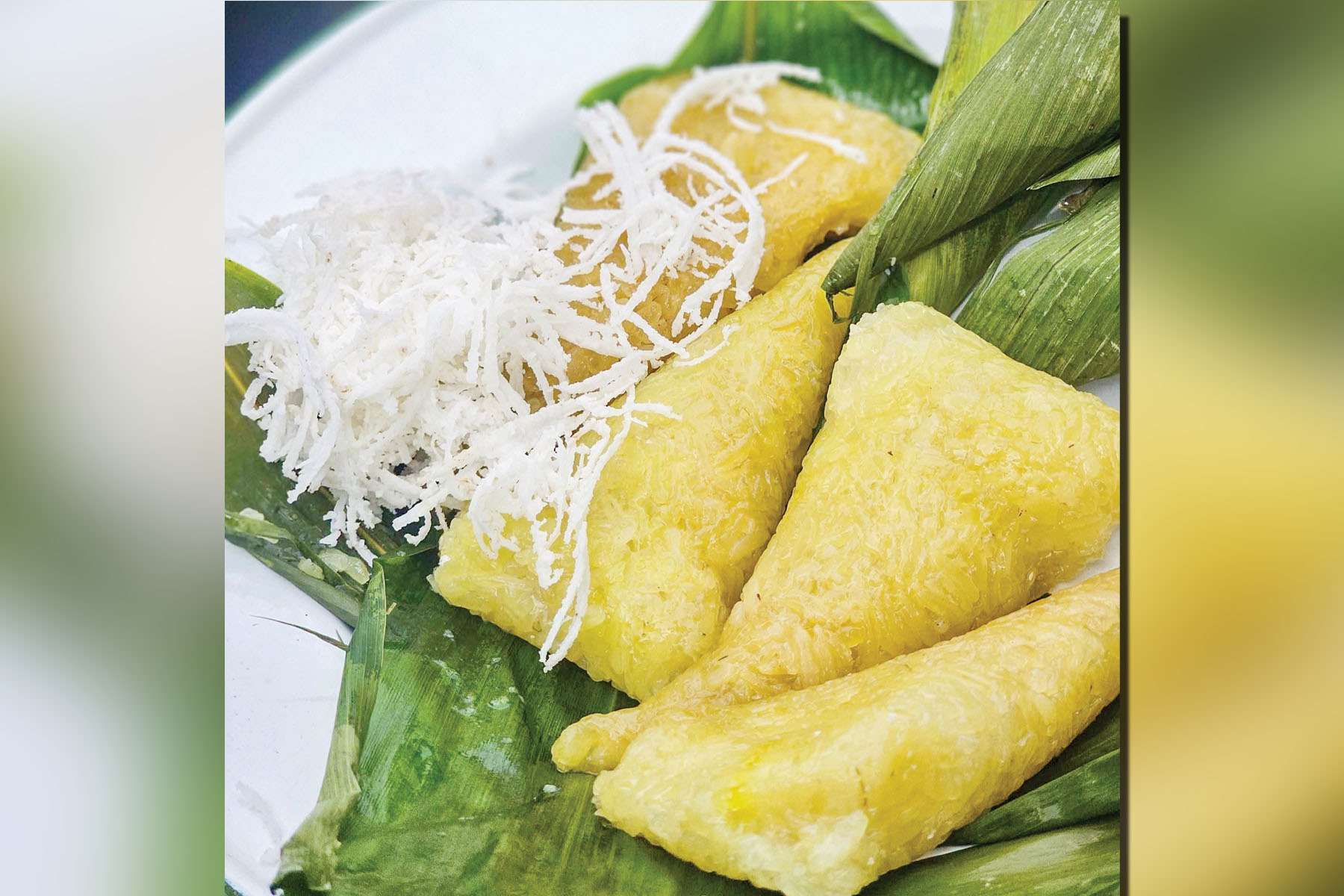
Kaukhnyin Htup (Sticky Rice Parcels)
WHEN talking about traditional Myanmar snacks, Kaukhnyin Htup (sticky rice parcels) is an absolute must-include food. A true traditional Myanmar delicacy, sticky rice parcels combine soft, chewy sticky rice with the subtle, pleasant aroma of banana leaves.
In this week’s feature on sticky rice parcels, we will be presenting three popular varieties commonly enjoyed by Myanmar people: Banana Sticky Rice Parcels, Bean Sticky Rice Parcels, and Pork Sticky Rice Parcels.
• Banana Sticky Rice Parcels: Combining the natural sweetness of bananas, the rich and creamy taste of coconut milk, and soft, chewy sticky rice, this offers a sweet, savoury, and melt-in-your-mouth flavour.
• Bean Sticky Rice Parcels: Featuring the nutty, rich flavour of mung beans or split peas paired with fragrant sesame salt, this delivers an authentic, timeless traditional taste.
• Pork Sticky Rice Parcels: Filled with flavorful, mildly spiced pork belly whose savoury oil permeates the sticky rice, this is hearty and satisfying enough to replace a full meal.
Now, let’s take a look at the ingredients needed and how to make these delicious sticky rice parcels.
Basic Ingredients
1.1Sticky rice (white or black): Soaked in water for about 4 hours and drained.
2. Ripe bananas: (Rakhine bananas preferred).
3. Banana leaves: Warmed over low heat or blanched in hot water and cleaned.
4. Bamboo strings or cotton twine.
5. A little salt.
6. A little oil.
Instructions (By Type)
1. Banana Sticky Rice Parcels
• Mix the soaked sticky rice thoroughly with a little salt.
• Spread out a banana leaf and place about 2 tablespoons of sticky rice in a thin layer.
• Place half a ripe banana in the centre and cover it with more sticky rice on top.
• Roll the banana leaf tightly, fold both ends, and tie securely with bamboo string.
• Place in a steamer and steam for about 1 hour until soft and tender.
2. Bean Sticky Rice Parcels
• In a bowl, thoroughly mix boiled split peas (or mung beans) with soaked sticky rice, a little salt, and a little oil.
• Place an appropriate amount of the sticky rice and bean mixture onto a banana leaf.
• Neatly wrap it into an envelope shape or a roll shape, and tie it securely with string.
• Submerge in a large pot of water and boil over medium heat for about 1 and a half hours until the beans are soft and tender.
3. Pork Sticky Rice Parcels
• Cut pork belly into small pieces, marinate with ginger, garlic, soy sauce, Chinese five-spice, and black pepper for about half an hour, then sauté in a pot until tender and fragrant.
• Mix the sticky rice with light soy sauce, a little salt, and a little garlic oil until evenly colored.
• Fold the banana leaf into a cone shape, add a small amount of sticky rice, place a piece of pork in the centre (along with salted duck egg yolk or dried mushrooms if preferred), and cover with more sticky rice on top.
• Fold the top of the leaf, tie securely with string so it doesn’t leak during cooking, and steam for at least two hours until both the sticky rice and pork are melt-in-your-mouth tender.
Serving Suggestions
• Banana Sticky Rice Parcels: Best enjoyed as a sweet breakfast or snack topped with grated coconut and sesame salt, paired with hot green tea or bitter black coffee.
• Bean Sticky Rice Parcels: Drizzle with fragrant sesame oil and sprinkle with sesame salt to highlight the authentic traditional flavour.
• Pork Sticky Rice Parcels: Pair exceptionally well with vinegar, a tangy dipping sauce, spicy chilli oil, or pickled vegetables to balance the rich and savoury flavour.
Nutritional & Health Perspective
Sticky rice parcels are rich in carbohydrates, keep you full easily, and provide a quick burst of energy, making them a reliable choice for travellers. Bean parcels offer plant-based protein and fibre, while banana parcels provide potassium.
However, because sticky rice is high in carbohydrates, harder to digest, and has a high glycemic index (causing rapid blood sugar spikes), diabetics, individuals with weak digestion, and those with high blood cholesterol (especially when consuming pork parcels) should enjoy them in moderation rather than eating large amounts.
Presented affectionately from a health perspective! — MOON


