
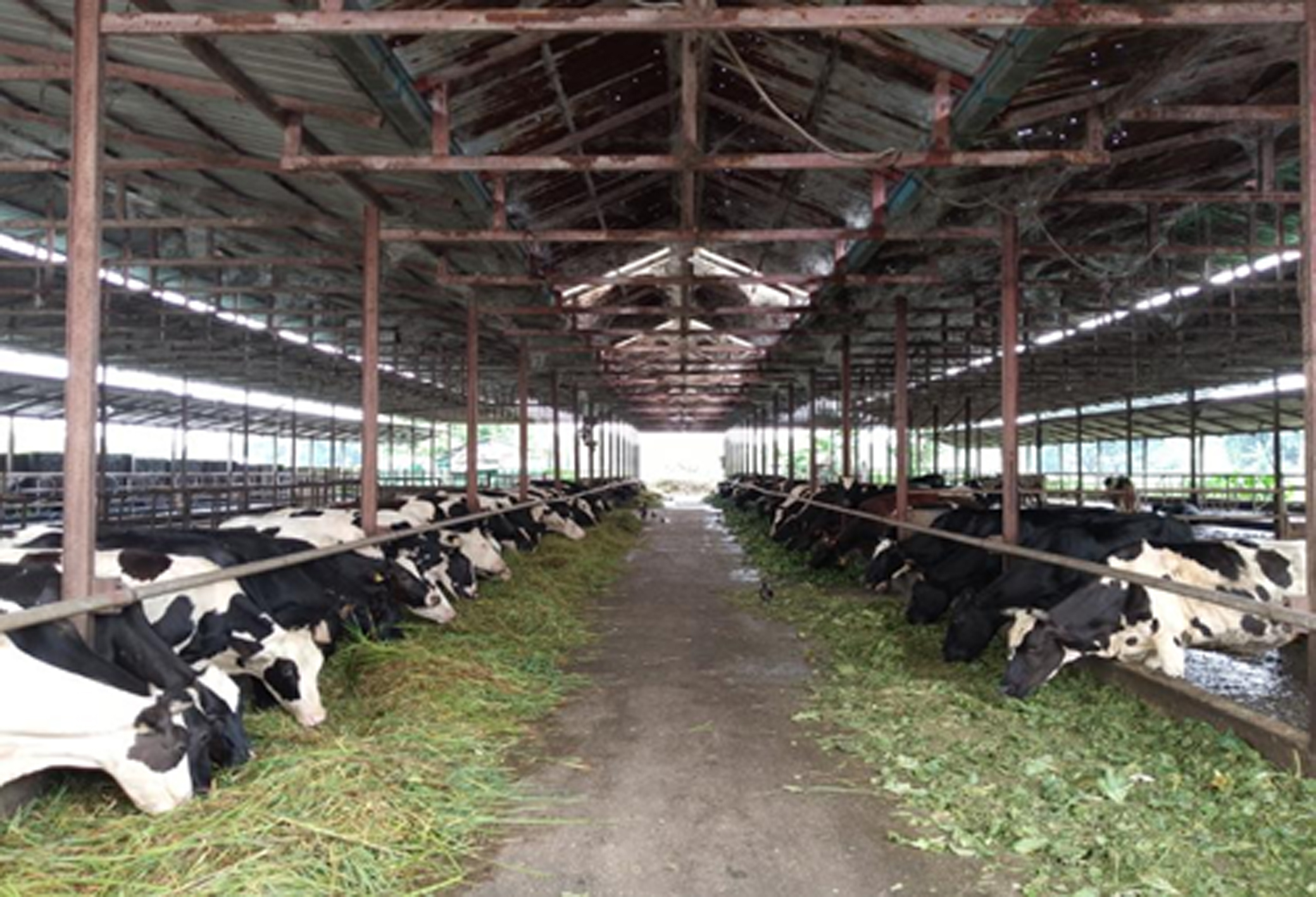
MORE than 22,000 dairy cattle are being raised in Yangon Region, with the largest number kept in Mingaladon Township, which also produces and distributes the highest volume of milk and dairy products, according to sources.
There are 12 businesses engaged in value-added milk and dairy product processing in the region. Large-scale livestock farms, including Ngwesin Pale, Walco, Aarman, TM, Shwepuzun, Funwa and Boss, produce milk and dairy products on a daily basis for distribution in Yangon and across the country.
A total of 22,374 dairy cattle are being raised in Yangon Region, including 11,679 cattle kept at 255 commercial dairy farms, with the remainder being raised by small-scale farmers.
The largest number of dairy cattle is raised in Mingaladon Township, where 4,454 cattle are kept. Of these, 3,557 cattle are raised at 57 commercial dairy farms, while 897 are kept at 118 small-scale dairy farms.
Mingaladon Township produces about 8,000 viss of milk per day. Of this, dairy businesses including TM, Arman, Ngwe Sin Pale and Walco process around 6,100 viss of fresh cow’s milk daily into value-added products, including 3,190 viss of pasteurized milk, 1,040 viss of yoghurt, 1,720 viss of fresh milk, 30 viss of butter, 60 viss of pudding and 60 viss of condensed milk, which are distributed to consumers.
“The Livestock Breeding and Veterinary Department is providing livestock farmers with training and awareness programmes to promote the development of dairy cattle farming in the region. These include livestock management, fodder crop cultivation, silage-making and artificial insemination training to improve breeding quality and productivity. We are also continuously carrying out measures for the prevention and control of infectious diseases, biosecurity and dairy cattle health care. Since the production and consumption of clean and fresh dairy products depend on proper livestock management, we are cooperating with livestock companies to promote production in accordance with good farming practices and to expand dairy cattle farming,” said Dr Aung Myint Han, director of the department.
In feeding dairy cattle, small-scale farms mainly use locally available grass under the cut-and-carry system. Commercial farms grow fodder crops such as para grass and Napier grass themselves and use them as the main feed, supplemented with cabbage leaves. Straw is occasionally fed during the summer. Concentrated feeds, including commercially produced feed such as De Heus, brewers’ grains, mung bean powder, bean paste, corn powder, soybean meal, sesame cake, rice bran, bean husks, coconut cake and sesame residue, are mixed and fed as appropriate. Some farms also provide molasses as a feed supplement. — Nyein Thu (MNA)/KTZH


