
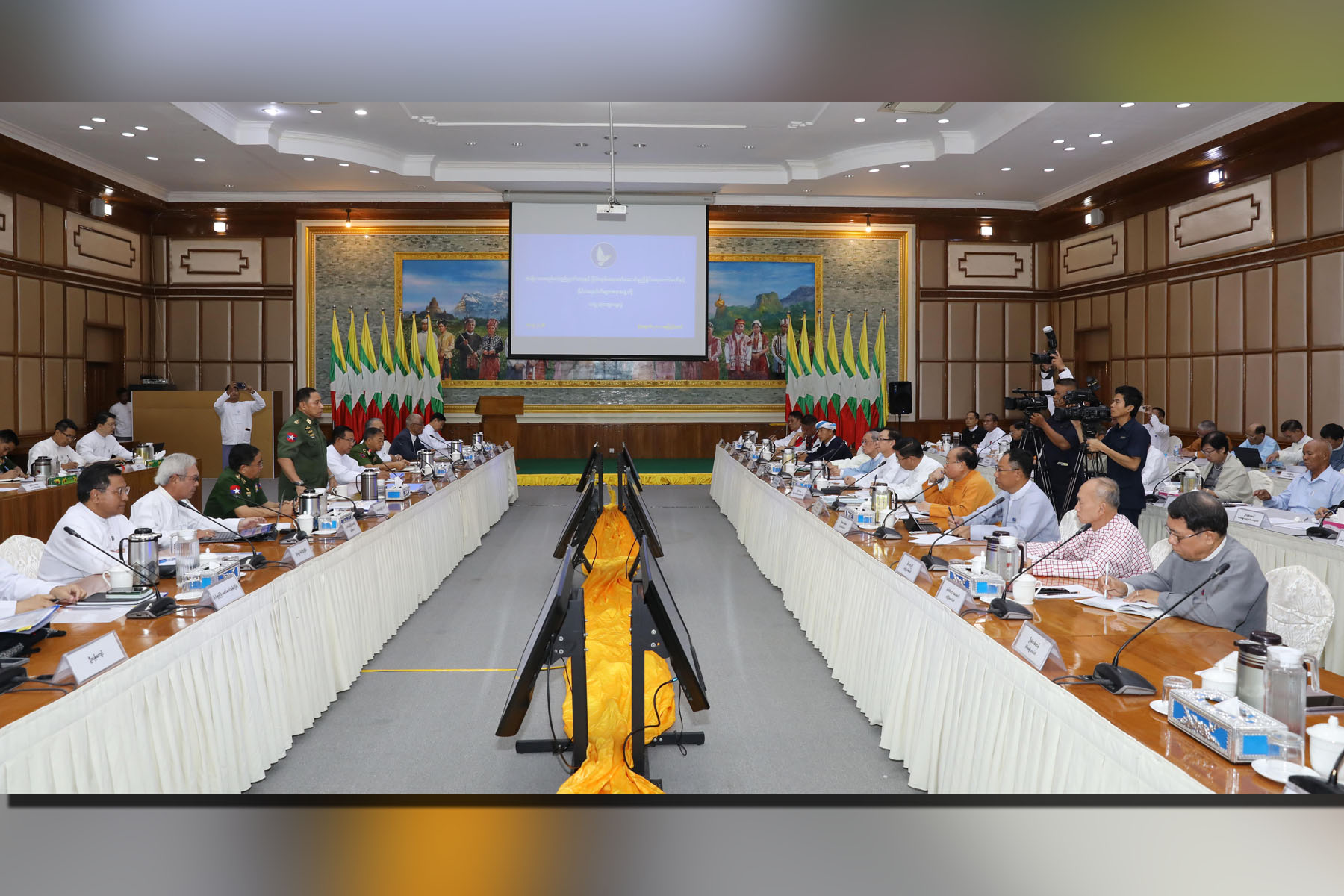
THE National Solidarity and Peacemaking Negotiation Committee (NSPNC) and representatives of political parties met yesterday morning in Nay Pyi Taw.
The event was attended by NSPNC Chairman Lt-Gen Yar Pyae, UEC members, chairpersons, vice-chairs, general secretary, executive members and relevant officials of 32 political parties.
Speaking at the event, Lt-Gen Yar Pyae said that the meeting with political parties was the second of its kind. He said that a 16-member permanent working group representing the group of political parties would be selected at the meeting to facilitate peace discussions with the NSPNC. Political parties represent the people and said that previously agreed discussion points would continue to be addressed. He called on political parties to discuss possible ways to help persuade armed groups to return to the legal fold and to assist ethnic armed organizations that had signed the Nationwide Ceasefire Agreement (NCA) but subsequently distanced themselves from the peace process for various reasons to return to the path of peace.
He also called for discussions on measures to restore conflict-affected areas to their previous condition and on ways in which political parties operating in areas where ethnic armed organizations are based could contribute to peace efforts. He then urged the participants to openly discuss constitutional issues and peace-related matters previously discussed with political parties, and measures to enable internally displaced persons (IDPs) in conflict-affected areas to return to their places of origin.
NSPNC Secretary Lt-Gen Min Naing and NSPNC member Lt-Gen Khin Zaw Oo (Rtd) explained the peace efforts under the State Administration Council government, peace-related activities under the new democratic government, humanitarian assistance, and the policies, directives and ongoing peace initiatives for national solidarity and peace, peace process framework based on previous experiences and achievements, future directions, a transitional strategy and trust-building measures in line with the current political situation.
Representatives of the 32 political parties openly discussed previously signed bilateral agreements, consultations with peace partners, peace forums in regions and states, the role of media in the peace process, legal dispute resolution, humanitarian assistance, framing rules and regulations for political party participation, women’s participation in peace processes, cooperation for national stability and peace, possible amendments to the 2008 Constitution, public awareness activities and future peace efforts. The first day of the meeting was then adjourned.
The second-day meeting will be on 18 September (today). — MNA/KTZH


