
Myanmar is taking steps to establish a national framework for the systematic implementation of nuclear energy programmes and projects, including planned small modular reactor (SMR)-based electricity generation, while strengthening cooperation with international and regional partners for the peaceful use of nuclear energy, President U Min Aung Hlaing said at the inaugural meeting of the National-Level Nuclear Energy Implementation Steering Committee in Nay Pyi Taw yesterday afternoon.
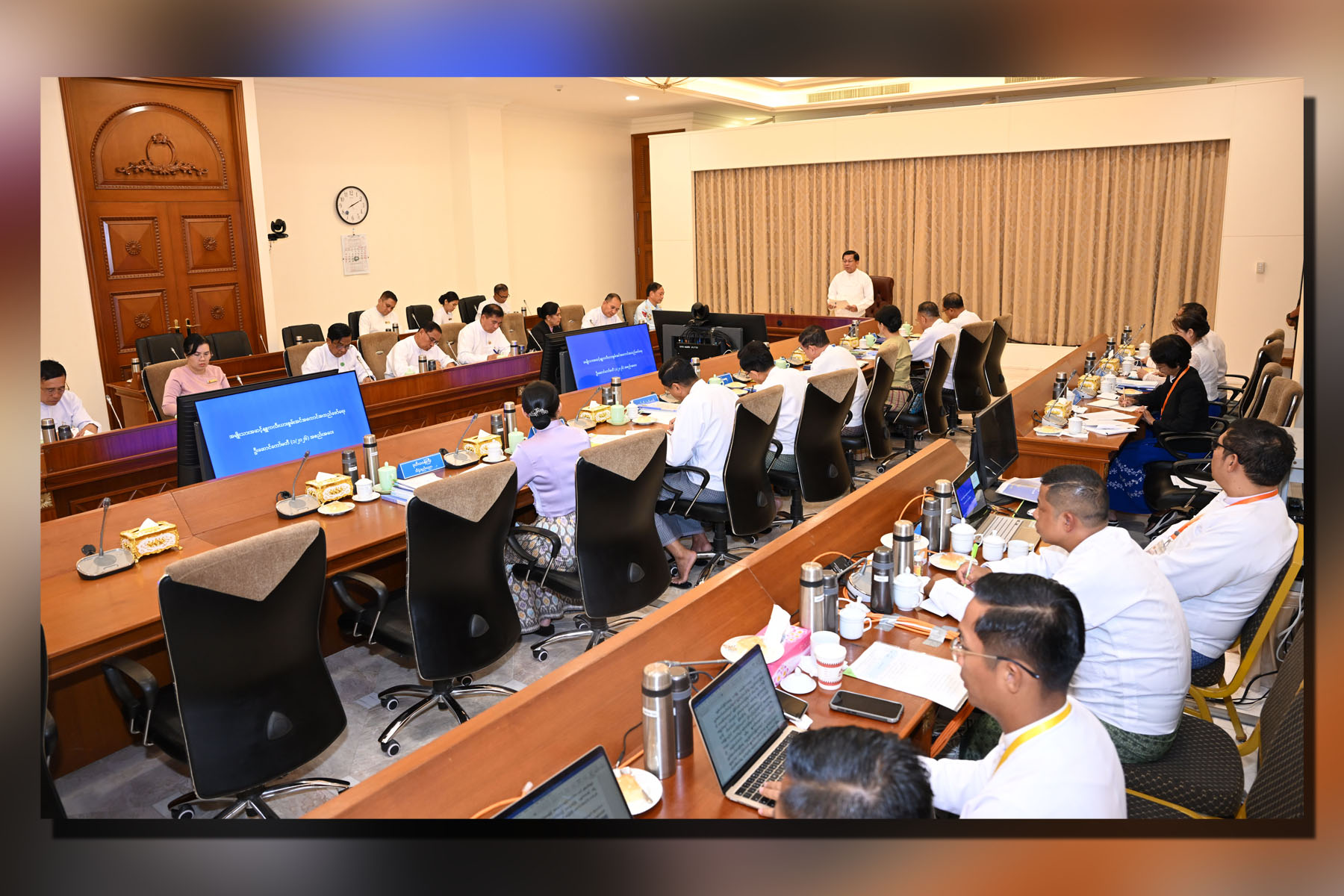
The inaugural meeting of the National-Level Nuclear Energy Implementation Steering Committee was held at the Presidential Office meeting hall in Nay Pyi Taw, with Union ministers, deputy ministers and other committee members attending the meeting.
In his opening remarks, President U Min Aung Hlaing, Chairman of the committee, said the meeting was convened to establish visions, procedures, necessary directives and guidelines for implementing Myanmar’s nuclear energy programmes and projects, as well as to build international and regional partnerships for the peaceful use of nuclear energy. He emphasized that the nuclear energy sector concerns national interests and is not the responsibility of a single ministry, but rather a major long-term national-level collaborative project requiring the active involvement of the committee.
The President highlighted that energy security, encompassing energy adequacy, stability and long-term sustainability, has become an essential foundation for the economic and social development of every nation. Reliable long-term energy sources are necessary to support industrial development, the application of modern technologies and socio-economic advancement. Against this backdrop, he said the peaceful utilization of nuclear energy and technology should be regarded as an important sector for national development.
The President noted that Myanmar’s study and development of nuclear technology is not new. The Union of Burma Applied Research Institute (UBARI) was established in 1954 for scientific and technological research and development, while the Atomic Energy Centre (AEC/UBAEC) was established under it in 1955 with a long-term vision for the peaceful applications of atomic energy.
Myanmar participated in the 1955 International Conference on the Peaceful Uses of Atomic Energy and became a member of the International Atomic Energy Agency (IAEA) upon its establishment in 1957. From 1956 to 1962, Myanmar also sent scholars for domestic and overseas training and scholarships.
Research was subsequently conducted in agriculture, health and environmental sectors, including agricultural advances such as rice-breeding technology and the development of the “ Shwe Wah Tun” rice variety through nuclear applications.
The President said global attention had once again turned to nuclear energy amid growing concerns over energy security, rising electricity demand and carbon emissions, underscoring the need for Myanmar to systematically assess the role of nuclear energy in meeting its long-term energy requirements and for the national energy policy to adopt a diversified energy mix combining renewable energy, natural gas and other energy sources rather than relying on a single resource.
According to the President, nuclear energy can provide stable electricity generation around the clock with low greenhouse gas emissions, while being less dependent on weather conditions and requiring a relatively small land area for power plants. In this regard, plans are underway to generate electricity using SMR-based nuclear technology to help meet Myanmar’s electricity needs. The President also highlighted the peaceful applications of nuclear technology in healthcare, agriculture, food safety, industry, research and science.
He stressed that the use of nuclear technology for national interests requires attention not only to technology acquisition but also to safety, security and safeguards – the three principles known as the 3S principles – as well as compliance with international guarantees and regulations.
He emphasized the importance of cooperation with international organizations, particularly the IAEA, to ensure adherence to international standards and best practices through technical cooperation, expert exchanges and human resource development, while noting that Myanmar is implementing nuclear-related activities within the IAEA framework for the peaceful use of atomic energy.
Myanmar has also signed bilateral agreements with Russia’s state-owned corporation Rosatom covering nuclear technology development and has jointly organized annual science festivals with Rosatom, with another festival planned for early December this year.
Following a presentation on implementation progress by Committee Secretary and Union Minister for Science and Technology Dr Myo Thein Kyaw and reports by Union ministers heading the respective sub-committees, the President delivered the closing remarks and concluded the meeting. — MNA/TH


