
Agricultural and livestock breeding must be systematically expanded in line with local needs to safeguard food security.
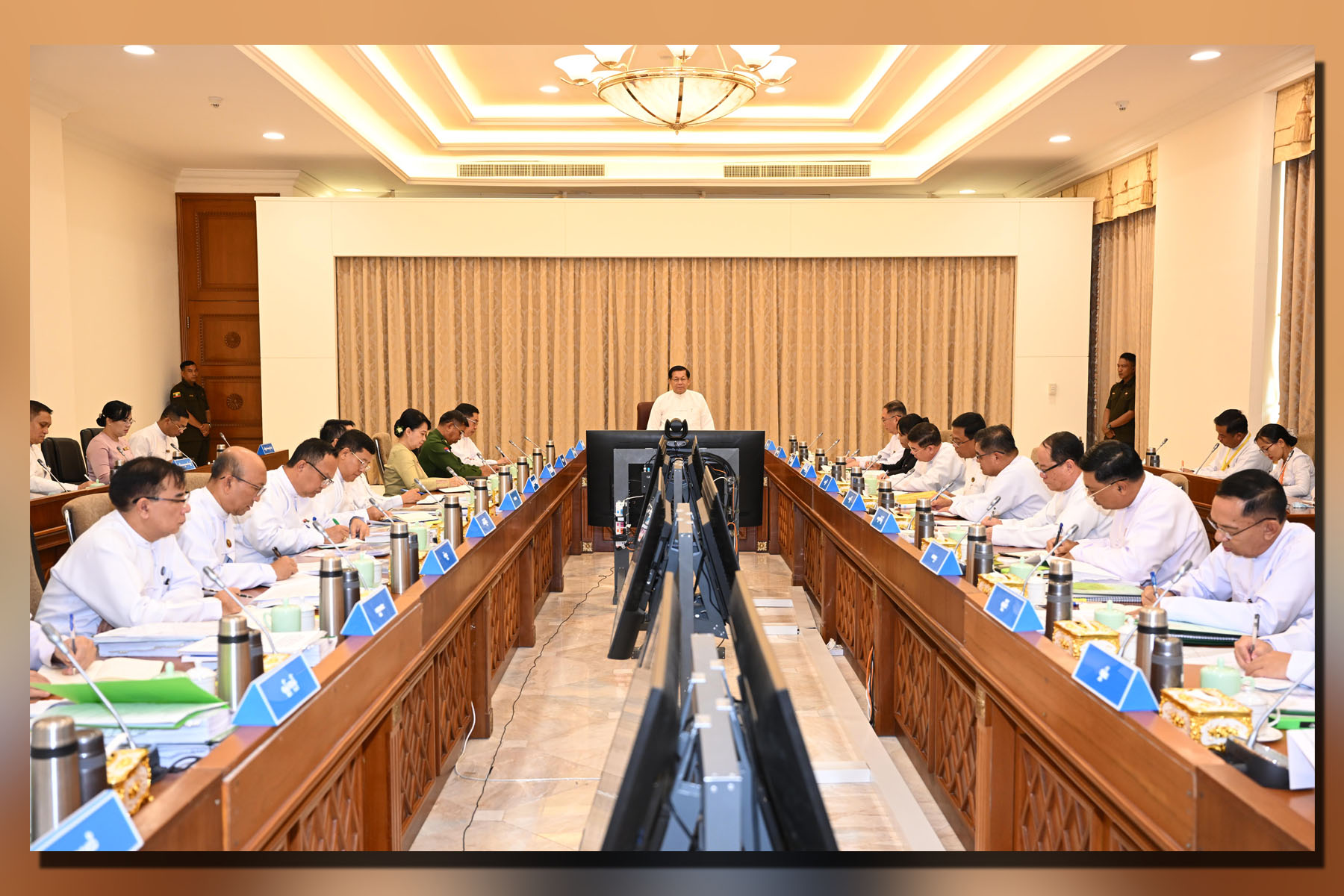
Local authorities need to address the issue of commodities’ high prices that people face, said President of the Republic of the Union of Myanmar U Min Aung Hlaing at the meeting with the Nay Pyi Taw Council chairman and chief ministers of regions and states at the President’s Office yesterday morning.
The President stated that agricultural and livestock breeding activities should be systematically assessed and expanded based on the needs of each locality to ensure food security in their respective areas.
He said that land allocated for agricultural and livestock breeding activities should be properly utilized, and any misuse or diversion of such land for other purposes should be systematically controlled in accordance with the laws, rules and regulations.
He stressed that there have been cases of the authority granted for security purposes at the checkpoints being improperly exercised. As a result, the illegal flow of goods has been occurring, with the public consequently bearing the brunt of rising commodity prices. He instructed that these issues be addressed effectively and that violations of the law be dealt with firmly and in accordance with the law.
He noted that the main oilseed crops such as sesame, sunflower, groundnut, soybean and oil palm are successfully cultivated and produced in the country on a commercial scale, greatly contributing to ensuring domestic edible oil sufficiency.
He added that if oil palm could be successfully cultivated and edible oil produced in Taninthayi Region, it would help ensure sufficient supplies of edible oil for Taninthayi Region, Mon State and Kayin State.
He unveiled that a degree college appropriate to the local population would be opened in the PutaO area for the development of border regions and ethnic peoples. It would greatly benefit the region if the college were initially opened with appropriate academic disciplines, including law and economics.
He underscored that Myanmar is proceeding along the path towards a multiparty democratic system and that there is still much work to be done in the legislative sector. While there are still matters at the Union level that need to be supplemented, amended or newly drafted, regions and states should also consult with their respective regional and state law officers and work to review, amend, redraft and enact laws that are appropriate and in line with current conditions in their respective fields.
Union ministers, the Nay Pyi Taw Council Chairman and chief ministers of regions and states reported on the efforts to reduce commodity prices and local food security, oil crop production to meet the target, development for MSME businesses, preparations to address drinking and agricultural water shortages, and resettlement of the displaced people to their native areas.
In delivering a further speech, the President noted that the relevant ministries and the chief ministers of the regions and states should continue to systematically implement, step by step, the policy laid down by the State to successfully promote the education sector.
He stated that in prioritizing poverty reduction through the effective utilization of the country’s existing resources, efforts should focus on creating employment opportunities and enabling people to engage in productive work with the creation of a favourable environment for employment and livelihoods and to give due priority to implementing these measures.
Regarding the issuance of citizenship scrutiny cards, the President said that practices such as obtaining citizenship through fraudulent means, impersonating citizens and improperly granting guest citizenship pose risks to national security and national interests. He stressed the need to study the citizenship law, conduct thorough scrutiny, identify such cases and take action against those involved in accordance with the law.
He underlined that the relevant ministries, regions and states should make concerted efforts to ensure the proper collection of taxes and duties due to the State and to prevent tax evasion.
The meeting was also attended by Vice-President U Nyo Saw, Union ministers and officials. — MNA/TTA


