
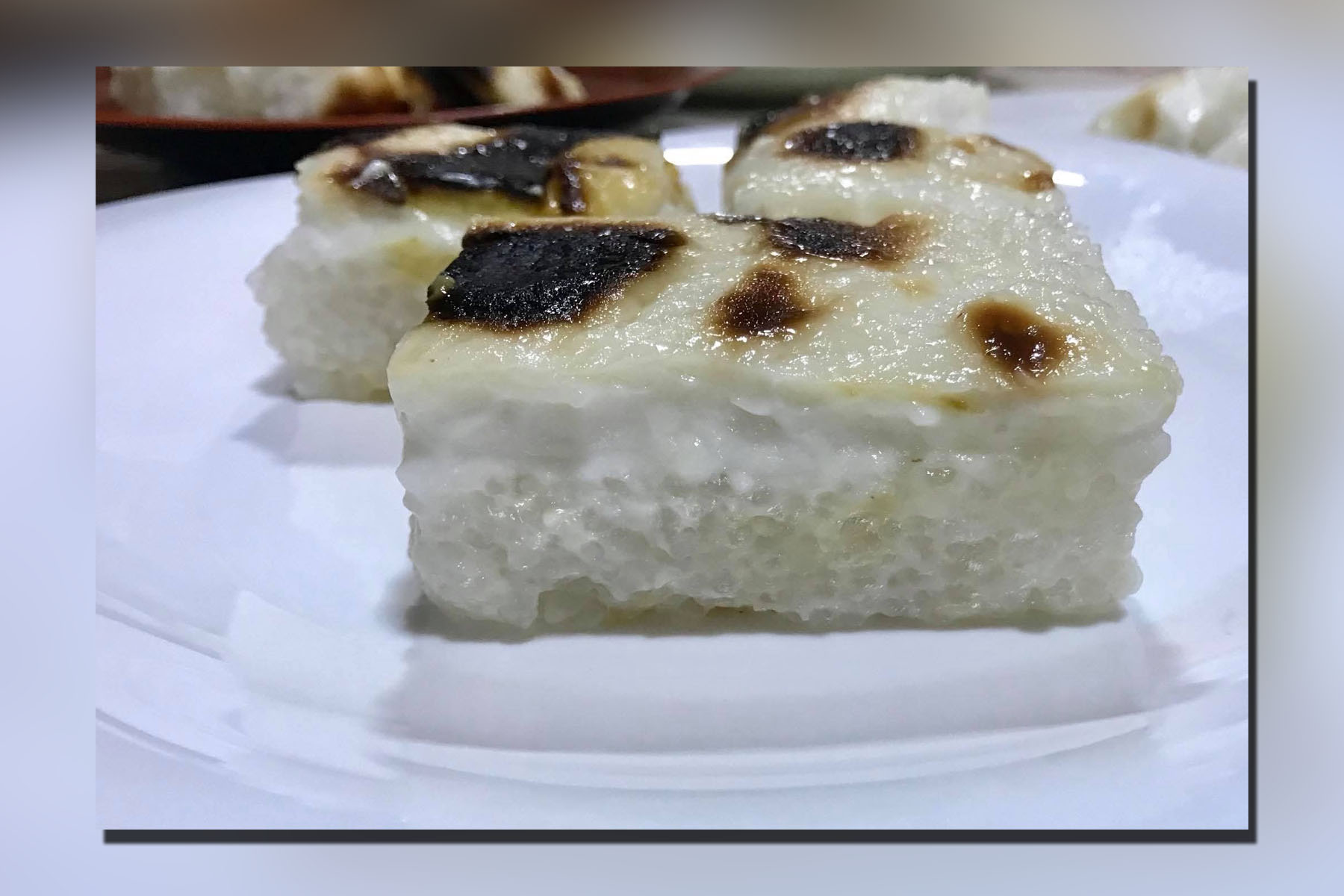
A Traditional Myanmar Sweet Delight
A FAMILIAR, much-loved treat at traditional Myanmar religious donation ceremonies and afternoon tea gatherings, coconut milk sago cake is an irresistible dessert that makes mouths water at first sight. Its attractive appearance, with a layer of translucent, soft, chewy sago pearls topped with a rich coconut milk custard delicately scented with roasted sesame seeds, makes the neatly cut diamond-shaped or square pieces especially tempting.
The main appeal of coconut milk sago cake lies in its beautifully balanced combination of sweetness and creamy richness. The bottom layer, made from sago pearls, has a pleasantly chewy texture and a delicate sweetness with a subtle sugary aroma.
The upper layer of coconut milk custard, meanwhile, offers the full richness and creaminess of pure coconut milk. A little salt is added to create a mildly savoury note that balances the sweetness and prevents the dessert from becoming overly rich. When combined with the distinctive aroma of roasted sesame seeds, these flavours come together to create a wonderfully harmonious blend of sweetness, creaminess and fragrance.
Now, let’s set aside our cravings for a moment and explore how to prepare this delightful coconut milk sago cake at home, so that we can enjoy it with our families or serve it as a delicious and nourishing treat to guests.
Ingredients
(The following quantities are suitable for preparing one medium-sized tray of coconut milk sago cake at home.)
For the sago layer
1. Small sago pearls – 1 cup (washed and drained)
2. Water – approximately 3½ to 4 cups
3. Sugar – ½ cup (adjust according to your preferred level of sweetness)
4. Salt – ¼ teaspoon
For the coconut milk topping
1. Thick coconut milk (first extraction) – 1½ cups
2. Rice flour – 2 tablespoons
3. Cornstarch – 1 tablespoon (to give the coconut custard a smooth and firm consistency)
4. Sugar – 1 tablespoon
5. Salt – ½ teaspoon (to bring out the creamy, mildly savoury flavour of the coconut custard)
6. Roasted white sesame seeds – a small amount (for sprinkling on top)
Step-by-Step Preparation
1. Cook the sago
- Pour the water into a saucepan and bring it to a rolling boil.
- Once the water is boiling, add the drained sago pearls and stir continuously with a spoon to prevent them from sticking to the bottom of the pan.
- When the small white centres inside the sago pearls have almost disappeared, and the pearls become nearly transparent, add the sugar and salt and stir well.
- Once the sago mixture becomes thick, sticky and translucent, turn off the heat. Pour it evenly into a lightly greased tray or mould and smooth out the surface.
2. Prepare the coconut milk mixture
- In a small saucepan, combine the coconut milk, rice flour, cornstarch, sugar and salt.
- Stir thoroughly until all the ingredients are evenly incorporated and no lumps remain.
3. Cook the coconut milk custard
- Place the saucepan over low heat and stir the coconut milk mixture continuously.
- Continue cooking until the mixture thickens and begins to bubble. It should develop a smooth, soft, creamy custard-like consistency.
4. Add the coconut layer and steam (optional)
- While the coconut milk mixture is still warm, pour it evenly over the prepared sago layer and spread it gently to cover the entire surface.
- Sprinkle the roasted sesame seeds over the top.
(If you prefer a firmer cake that holds its shape better, you can cover the tray and steam it in a steamer for approximately 10 minutes.)
5. Allow to cool and cut into pieces
- Leave the tray at room temperature for at least two to three hours to cool completely.
- Once both the sago and coconut milk layers have cooled and set firmly, lightly grease a knife with a little oil and cut the cake into neat diamond-shaped or square pieces.
The coconut milk sago cake is now ready to serve and enjoy!
Health and Nutritional Benefits
Provides readily available energy and is easy to digest
Sago is a carbohydrate-rich food that is generally easy to digest and provides the body with readily available energy. It can be a convenient source of energy when the body needs replenishment.
Contains natural fats from coconut
Coconut milk contains naturally occurring fats, including medium-chain fatty acids, commonly referred to as medium-chain triglycerides (MCTs). These fats contribute to the dessert’s rich flavour and creamy texture.
Naturally gluten-free
As the recipe uses sago and rice flour rather than wheat flour, it is naturally gluten-free, making it a suitable dessert option for people who need to avoid gluten, provided that the ingredients are not contaminated with gluten during processing or preparation.
A word of caution
It is worth noting that coconut milk contains relatively high levels of saturated fat, while sago is rich in carbohydrates. Consequently, coconut milk sago cake is a relatively calorie-dense dessert.
People with diabetes, high blood pressure or elevated blood lipid levels should be mindful of portion sizes and consider reducing the amount of added sugar. Those who need to manage their cholesterol levels should also take the saturated fat content of coconut milk into consideration.
With these considerations in mind, coconut milk sago cake remains a delightful traditional Myanmar dessert made with familiar natural ingredients. Its combination of soft, chewy sago pearls, rich coconut milk custard and fragrant roasted sesame seeds makes it a satisfying treat and a wonderful way to appreciate Myanmar’s traditional culinary heritage. That is our traditional food feature for this week. We hope you enjoy preparing and sharing this delicious homemade treat with your family and friends. — MOON


