
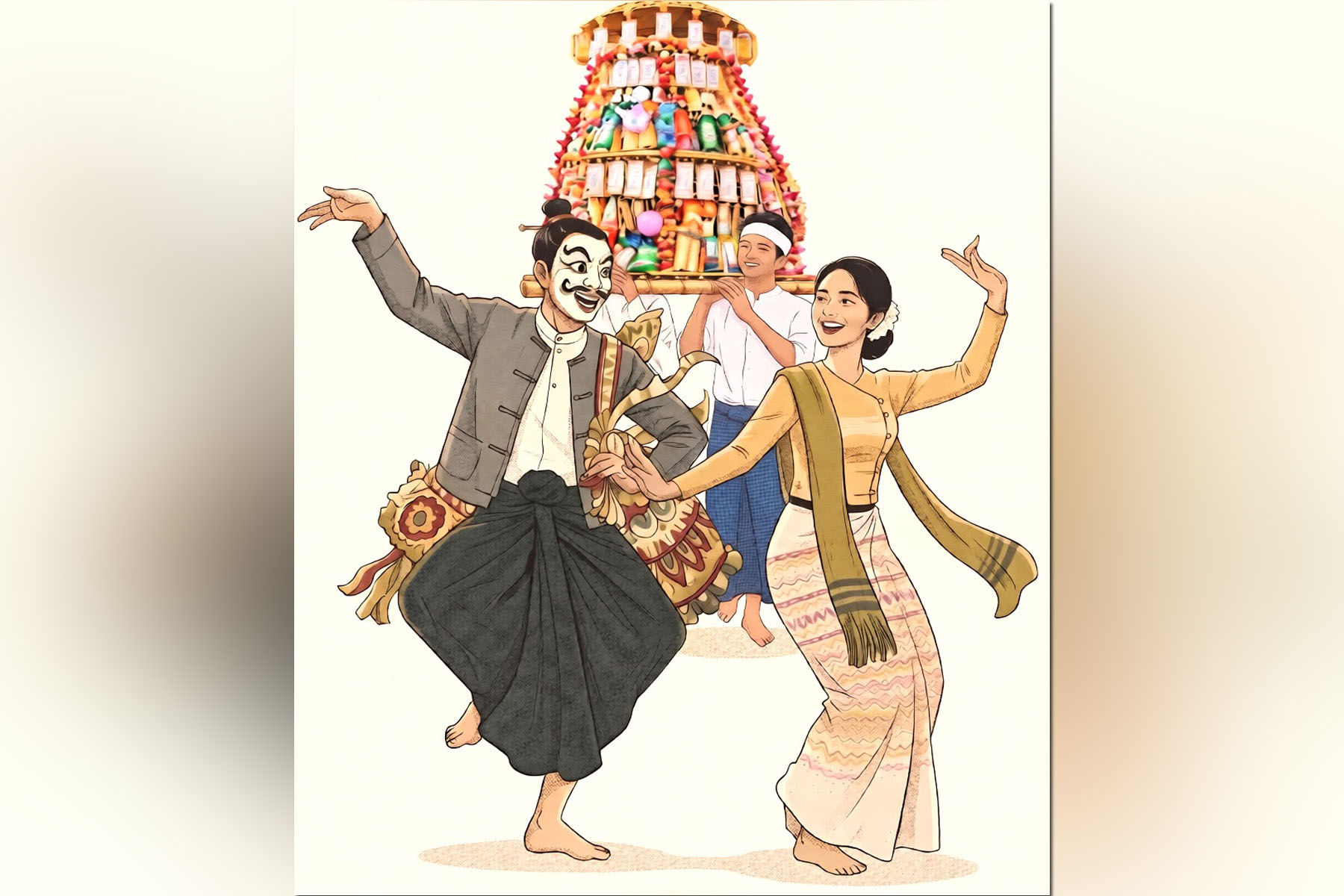
By Laura Htet (UDE)
Some nights seem to carry a little more meaning than others. The moon appears brighter, the breeze feels gentler, and familiar places take on a beauty that is difficult to describe. In Myanmar, the Full Moon Day of Tazaungmone brings just such a feeling. As November arrives with its cool evenings, pagodas glow with candlelight, monasteries welcome devotees, and families come together to prepare offerings. Beyond the beautiful celebrations, however, lies something far more precious: a reminder of how generosity, faith and kindness can bring warmth into our lives.
Tazaungmone is one of the most meaningful months in the Myanmar calendar, particularly for Buddhist devotees. The full moon marks the end of Buddhist Lent, a period traditionally devoted to religious practice, reflection and spiritual discipline. During this time, many people make special efforts to observe religious principles, offer donations and develop good habits. When the full moon arrives, the atmosphere becomes especially joyful as devotees gather at pagodas and monasteries to pay homage, make offerings and share in the spirit of giving.
One of the most significant traditions associated with this occasion is the Kathina robe offering ceremony. Following the end of Buddhist Lent, devotees offer robes and other essential items to Buddhist monks as an expression of respect and gratitude. These ceremonies are not simply about presenting material gifts. They represent the devotion of people who wish to support the Sangha and contribute to the continuation of Buddhist teachings. Families and communities often work together to prepare food, arrange donations and welcome others to participate. In every offering, there is a quiet expression of faith and a sincere wish to do something meaningful.
Another remarkable tradition is the Mathoe Thingan weaving ceremony. During this special event, groups of women gather to weave robes throughout the night, hoping to complete them before dawn. The finished robes are then offered as acts of devotion. The tradition is particularly beautiful because it brings together patience, cooperation and dedication. Each person contributes time and effort, showing that meaningful achievements do not always come from individual strength. Sometimes, the most beautiful things are created when people work together with a shared purpose.
Tazaungdine is also widely recognized as a festival of lights. Candles, lanterns and colourful decorations brighten pagodas and public spaces, creating a wonderful atmosphere throughout the country. Among the most famous celebrations is the Taunggyi Hot Air Balloon Festival, where beautifully illuminated balloons rise into the night sky. Their glowing colours and impressive designs attract visitors and create unforgettable memories. Yet, beyond the excitement and spectacular sights, the lights carry a deeper message. They remind us that brightness has the power to transform darkness, just as kindness can bring hope into someone’s difficult moments.
Perhaps this is what makes the season so meaningful. It encourages us to think about the kind of light we bring into the lives of others.
We often associate generosity with wealth. We imagine that giving means making large donations, offering expensive gifts or having more than enough to share. However, true generosity is not measured by the size of what we give. A simple meal shared with someone hungry, a little help offered to an elderly neighbour, or a few encouraging words spoken to someone going through a difficult time can mean more than we realize. Sometimes, the smallest acts of kindness leave the deepest impressions.
The Full Moon Day of Tazaungmone offers a wonderful opportunity to look beyond our own concerns and become more aware of the people around us. While preparing donations for monasteries, we can also remember those who may be struggling quietly. Some elderly people may need a little companionship. Some families may be facing financial difficulties. Others may simply need someone willing to listen without judgement. We do not always need to do something extraordinary to make a difference. Often, being thoughtful and considerate is more than enough.
The occasion also brings generations together in a special way. Grandparents share familiar traditions with their grandchildren, parents teach their children the value of giving, and neighbours work side by side to prepare religious offerings. These moments may seem ordinary, but they help preserve the cultural and spiritual values that have been passed down through generations. Traditions remain alive not only through ceremonies but also through the lessons we carry into our everyday lives.
Beyond the celebrations, the full moon can also inspire us to reflect on our inner world. Life does not always move at the pace we wish. We face responsibilities, unexpected challenges and countless worries. Sometimes, we become so occupied with earning more, achieving more and planning for tomorrow that we forget to appreciate the simple blessings already within our reach. We may overlook the people who care about us, the kindness we receive and the peaceful moments that make life worthwhile.
A meaningful religious occasion gives us a reason to pause. It invites us to look at our thoughts, examine our actions and consider whether we have been living with enough patience, understanding and compassion. Have we been kind to the people around us? Have we listened before judging? Have we offered help when we had the opportunity? These questions may sound simple, but answering them honestly can encourage us to become better human beings.
Most importantly, the spirit of Tazaungmon should not disappear when the celebrations come to an end. Lighting candles, making donations and participating in religious ceremonies are beautiful expressions of devotion, but their deeper values should remain with us throughout the year. Generosity should not be limited to festival days, compassion should not depend on special occasions, and kindness should never become something we practise only when it is convenient.
As the Full Moon Day of Tazaungmone arrives once again, let us celebrate not only the beauty of our traditions but also the goodness they inspire in us. Let us give without expecting something in return, help without waiting to be asked, and treat others with the understanding we would hope to receive ourselves.
After all, the brightest light is not always the one hanging above a pagoda or shining in the night sky. Sometimes, it is found in a generous heart, a helping hand and a kindness that asks for nothing in return. The full moon may gradually fade from the sky, but the goodness we share can continue to shine long after the festival is over.


