MYANMAR has six major avocado-producing regions, and the country could generate at least US$100 million annually from avocado exports if export markets are opened up, according to the Myanmar Avocado Producers and Exporters Association (MAVO).
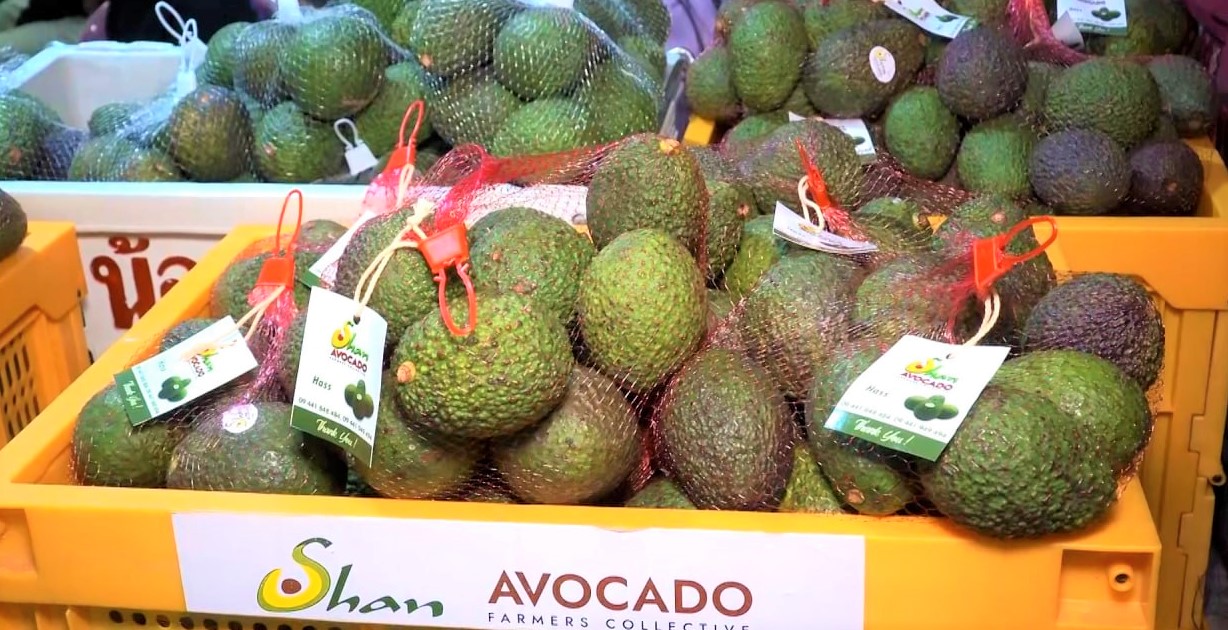
Local avocado varieties from Shan State were first exported to Hong Kong in the 2013-2014 financial year. To produce commercially viable, export-quality fruit, five varieties—Hass, Zutano, Reed, Lamb Hass and Bacon—were officially imported from California, the United States, in October 2018. As Hass adapts well to local conditions and meets international market standards, it has become widely popular both domestically and internationally.
In Shan State, commercial growers primarily cultivate the market-preferred Hass and Booth-7 varieties, along with smaller quantities of the other four imported varieties, which mature before the main harvest season. Previously, inconsistent harvesting periods and uneven fruit sizes hindered marketability. However, the grafting and propagation of the uniform and flavourful Hass variety have created significant opportunities for commercial cultivation and exports.
Hass avocados which grow at elevations of 3,000 feet mature in September, while those cultivated at 4,000 feet mature in November. At elevations of 5,000 feet, the fruit ripens in December and January. As Myanmar’s avocado harvest coincides with the end of Thailand’s avocado season, locally grown avocados typically command favorable market prices.
“Myanmar avocados fall into two main categories: foreign varieties and local varieties. Among local varieties, Amara is the favorite, while Hass is the preferred foreign variety. What we primarily need is market access. Chinese officials have already inspected farms and processing plants in Shan State, and the signing of the second-stage draft agreement has been completed, with only the final stage remaining. We are also working to secure official export access to Thailand. Since India also favours Myanmar avocados, obtaining export approval will generate significant foreign exchange earnings. Once export markets open up, avocado exports alone could earn more than US$100 million annually,” said U Khun Tun Tun Win, Chairman of the MAVO.
As avocado supplies from Thailand and Vietnam taper off in October, Myanmar avocados enter the market from November through January. During this period, their lower moisture content and higher oil levels enhance fruit quality, making them highly sought after by buyers.
Growers have also pointed out that, alongside investments in cultivation, the sector urgently needs cold storage facilities, packinghouses and processing plants. Rather than focusing solely on short-term profits, entrepreneurs should make coordinated investments in post-harvest infrastructure that benefits both the national economy and farmers’ livelihoods. Such investments will help ensure sustainable, long-term foreign exchange earnings from fruit exports.
Avocados are cultivated across Myanmar, particularly in PyinOoLwin, upper Sagaing Region, Shan, Chin, Kayah and Kachin states, with Shan State serving as the country’s primary production hub.
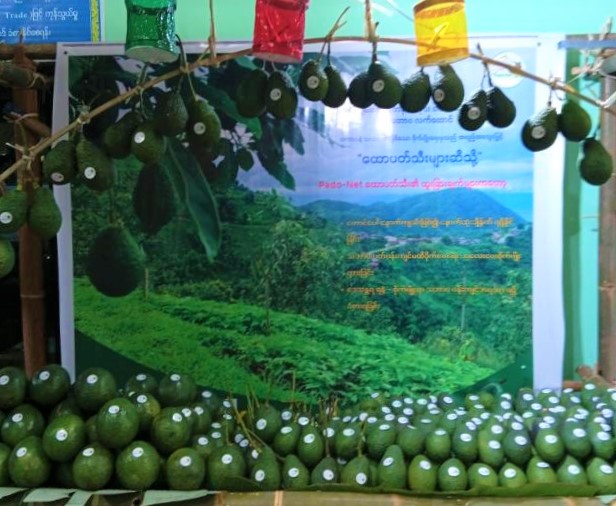
Meanwhile, the 2026 Avocado Festival is being held for five days, from 21 to 25 November, at the Myanmar Trade Promotion Organization in Taunggyi, alongside the Taunggyi Tazaungdine Festival. The promotional event features exhibition booths showcasing various culinary uses of avocados beyond smoothies, including household dishes such as avocado salad, avocado served with fermented fish dip, avocado paratha, spicy salads, savoury salads and other creative preparations. — Thitsa (MNA)/TH