
By Dr Than Tun 69 lM2
This article is an English translation of an article recently published in the Myanmar Alinn newspaper dated 31 October 2026 and The Mirror newspaper dated 2 November 2026.
THE El Niño weather phenomenon, which typically recurs every two to seven years, is projected to begin intensifying this year around October and November, reaching peak temperatures during the Christmas season in December. After remaining persistently hot, temperatures will gradually subside, though the heat is expected to persist through the onset of the monsoon season in 2027.
Every one-degree Celsius increase in external temperature immediately triggers physiological changes in the human body. To make this easily understandable, I will avoid medical terminology as much as possible, especially since I am witnessing so many people suffering from its effects.
For Every One-Degree Increase in External Temperature...
This does not mean your core body temperature rises by a full 1 degree Celsius; rather, you sweat more, leading to a greater loss of water and electrolytes. Your heart rate increases, which can result in lowered blood pressure and dizziness.
Extended exposure to extreme heat can lead to muscle cramps, fatigue, and heat exhaustion. High humidity further exacerbates the impact of heat because it hinders sweat evaporation. If you stop sweating, your body can no longer dissipate internal heat.
Crucially, it is not just the temperature alone that matters, but also the humidity, duration of sun exposure, and physical activity that must be taken into account. Areas characterized by high heat and humidity refer to environments heavy with moisture in the air – stifling, muggy, and oppressive.
Regions Most Vulnerable to the Effects of El Niño
El Niño will lead to severe climatic anomalies, particularly in regions situated close to the Equator. Southern Asia, in particular, will experience intensifying heat and worsening aridity. Furthermore, due to a weakened monsoon season, rainfall in these areas will decrease substantially.
Coastal regions such as Yangon, Myeik, Dawei, and the broader coastal belt of southern Myanmar are especially susceptible, alongside deltaic zones like the Ayeyawady Region and lower Bago Region.
Additionally, tropical rainforests, high-rainfall zones across Southeast Asia, and the coastal stretches of southern India face heightened risk. In densely populated urban environments – characterized by high concentrations of concrete infrastructure, vast paved roads, and sparse vegetation – the intense ambient heat will be significantly amplified.
Physiological Responses to Extreme Heat
When the ambient temperature rises by even a single degree, the brain’s thermoregulatory centre – the hypothalamus – immediately activates heat-dissipation mechanisms. Blood vessels dilate, and sweating commences to cool the body. To deliver more blood to the skin’s surface, the heart must pump with greater force and frequency, leading to an elevated heart rate. Consequently, the body rapidly depletes its essential water and electrolyte reserves – a state that poses severe health risks to human physiology.
How High Can Temperatures Rise?
Estimating Temperatures in El Niño Conditions: During a super El Niño period, temperatures can surge by approximately 3°Circ to 5 °Circ above normal climatic averages.
Impact in Myanmar: During peak summer months, extreme temperatures in certain regions can severely escalate to 43°Circ, 44°Circ, and even higher, posing a critical concern. Paradoxically, as winter approaches, rather than cooling down, temperatures will intensify – making the traditionally coldest period feel like the hottest.
Most Vulnerable Regions
High-Risk Areas in Myanmar: The central dry zone regions, including Chauk, Yezagyo, Pakokku, Mandalay, lower Sagaing, and western Bago Region, are projected to bear the brunt of the extreme temperatures. Major urban centres like Yangon will also experience severe heatwave impacts due to the urban heat island effect (concrete jungles) and high population density.
Beyond Heat: Associated Impacts
Climate: Prol onged droughts, delayed monsoons, and extended dry spells.
Ecosystems: Drying up of lakes and streams, elevated wildfire risks, and severe water scarcity for both humans and wildlife.
Agriculture: Forced shifts in planting seasons and potential crop yield reductions of up to 50 per cent due to inadequate water supply.
Global Impacts
South-East Asia: Below-average rainfall and heightened wildfire risks.
India and South Asia: Erratic monsoon patterns with direct repercussions on agricultural productivity.
Peru, Ecuador, and the South American Pacific Coast: Torrential rains, flooding, and disruptions to commercial fishing industries.
Australia and Parts of Southern Africa: Increased probability of droughts and severe heatwave conditions.
Parts of the Americas: Variable precipitation patterns (both excess and deficit) and altered winter climate regimes.
While global climate impacts are heterogeneous, severe droughts and intense heatwaves will predominantly affect Southeast Asia (Myanmar, Thailand, the Philippines, Indonesia), Australia, southern Africa, and parts of South America (Brazil, Peru).
Health Risks and Preventive Measures
Extreme heat can impair the body’s thermoregulatory mechanisms, potentially leading to life-threatening hyperthermia. Conditions such as heat exhaustion and the more severe, life-threatening heat stroke are expected to emerge.
Crucial Distinction: Heat stroke is a medical emergency far more severe than standard heat exhaustion; immediate medical attention must be sought.
Prevention & Safety Guidelines: Avoid non-essential outdoor activities during peak solar radiation hours from 10 am to 4 pm. When outdoors, use umbrellas, wear hats, and choose lightweight, breathable clothing. Maintain regular hydration rather than drinking only when thirsty. If symptoms such as dizziness, headache, nausea, or muscle cramps occur, cease activities immediately and move to a cool environment.
Emergency Warning Signs: Confusion, loss of consciousness, seizures, or extremely high body temperature indicate a severe heat-related emergency requiring immediate medical intervention.
Essential Guidelines for Living with Air Conditioning
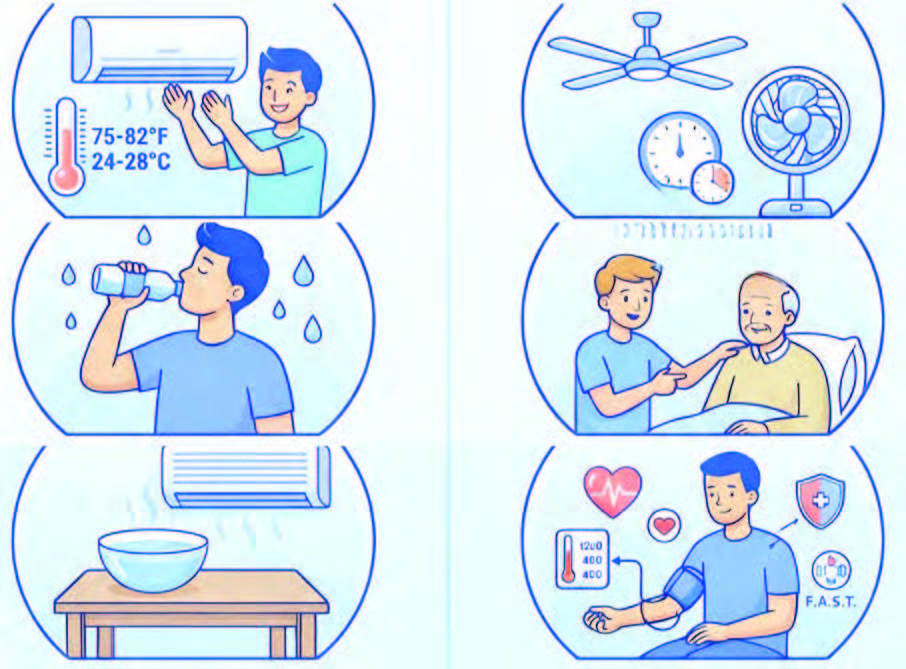
1. Maintain a Moderate Temperature: Set your AC to a steady 24°C to 26°C, or ideally 28°C if possible. It is largely a matter of habit.
2. Prevent Dehydration: Drink water frequently to keep your body hydrated.
3. Clean the Filters Regularly: Wash or clean your air conditioner filters every two weeks or at least once a month.
4. Prevent Excessive Indoor Dryness: Place a bowl of water in the room or briefly open the windows in the morning to maintain optimal indoor humidity.
5. Optimize Fan Usage: If using a fan, operate it with a timer and avoid directing the airflow straight at your face.
6. Protect Vulnerable Groups from Heat Stress: During peak afternoon heat, keep living spaces cool to prevent heat stroke in the elderly. If there is a power outage, open windows to ensure adequate ventilation.
7. Hydrate Mindfully: Sip water slowly and consistently throughout the day, and drink a glass right before bed. If you have prostate issues that cause frequent urination, consult your physician.
8. Ensure Air Circulation and Monitor Health: It is advisable to keep bedroom doors or windows slightly ajar, or ensure good daytime ventilation. For individuals with hypertension, measure your blood pressure upon waking in the morning, take medications consistently, and monitor for warning signs of a stroke (such as facial drooping, limb weakness, or slurred speech). Seek immediate medical attention at a hospital if any of these symptoms appear.
Who Needs Extra Care?
Vulnerable individuals who require special attention include those with heart disease, cardiac weakness, hypertension, chronic hypotension, diabetes, kidney disease, asthma, and other respiratory conditions. The elderly, infants, pregnant women, obese individuals, outdoor workers prone to excessive sweating, and those taking medications such as diuretics, antihypertensives, or hypoglycemic agents must exercise heightened caution. Do not alter or discontinue your medication regimen without consulting your doctor.
Potential Health Risks
Cardiovascular and Hypertensive Patients: In hot weather, blood vessels dilate and sweating increases, forcing the heart to pump harder. This places an extra workload on the heart, which can trigger chest pain (angina) or severe blood pressure fluctuations.
Kidney Health: Dehydration reduces overall blood volume, which diminishes renal blood flow and significantly increases the risk of kidney damage.
Diabetic Individuals: Dehydration causes blood to become more viscous (thickened), and excessive sweating can lead to critical electrolyte imbalances within the body.
Hypertension and Stroke Survivors: Extreme vigilance is required. Fluid and electrolyte imbalances, alongside sudden shifts in blood pressure, can induce fatigue and dizziness.
Watch for warning signs of a stroke: facial asymmetry, weakness in one limb, or slurred speech. If these occur, seek emergency medical care immediately.
The Elderly and Pregnant Women: Older adults often have a diminished sensation of thirst and a reduced physiological capacity to regulate internal body temperature. For pregnant women, dehydration and excessive heat exposure heighten the risks of dizziness, severe fatigue, and subsequent health complications.
At Home and For Travellers: Air Conditioning Guidelines
At home, avoid over-cooling the room with extreme air conditioning temperatures (e.g., around 16°C). Instead, maintain a steady temperature of 24°C to 26°C and ensure proper ventilation.
While travelling by car, refrain from setting the air conditioner to excessively low temperatures. Avoid significant temperature gaps between the vehicle interior and the outside environment; a variance of 5°C to 7°C is recommended.
Heart Disease Patients: Stay in a cool room while at home and adhere strictly to your doctor’s prescribed fluid intake. Avoid travelling during peak hot hours. If you experience chest tightness or pain, seek immediate medical assistance.
Kidney Disease Patients: Strict adherence to recommended salt and fluid limits is essential while at home. Avoid prolonged exposure to heat when outdoors or travelling. If you experience dizziness, move to a cool place immediately without delay.
Diabetic Patients: Regularly monitor blood sugar levels while indoors, and store medications and insulin at appropriate temperatures. When outdoors or travelling, always carry drinking water. Crucially, learn to distinguish between symptoms of hypoglycemia and heat exhaustion.
Asthma and Respiratory Patients: While at home, avoid exposure to cigarette smoke, mosquito coil fumes, dust, and extreme heat. Always carry prescribed inhalers when travelling, avoid strong odours or smoke inside vehicles, and wear a mask.
Hypertension and Stroke Patients: Take prescribed medications regularly while at home and check blood pressure if dizziness occurs. When outdoors or travelling, avoid sudden postural changes (such as standing up abruptly). Seek immediate medical care if any new symptoms arise.
Alighting from Air-Conditioned Buses
It is crucial to understand the physiological impacts of transitioning directly from a heavily air-conditioned bus to a hot, humid bus stop.
Entering an air-conditioned vehicle drenched in sweat from the heat causes a rapid drop in body temperature. Subsequently, exiting back into intense external heat exposes the body to a sudden thermal shock. This rapid “Hot- Cold-Hot” fluctuation compromises the body’s thermoregulation, leading to fever, headaches, nasal congestion, coughing, neck stiffness, and general body aches.
Key Precautions for Individuals with Hypertension, Diabetes, or a History of Stroke: Stay adequately hydrated before entering and after exiting vehicles; however, avoid drinking ice water. Remember to mitigate extreme heat exposure by using umbrellas or hats, staying in the shade, and keeping well-hydrated.
Impacts of Sudden Temperature Changes
The immune system and thermoregulation system of the body experience a sudden shock. Because blood vessels rapidly constrict and dilate, the cardiovascular and cerebrovascular systems are affected, which can lead to dizziness or even an elevated risk of stroke.
Transitioning abruptly from a hot environment to an air-conditioned space can cause malaise, headaches, and blood pressure fluctuations in some individuals. Prolonged exposure of the face and neck to cold air can exacerbate symptoms for those with asthma.
How to Protect Yourself When Alighting from Buses and Taxis
A minute or two before getting out of a private car or taxi, turn off the AC or reduce the airflow to allow your body temperature to gradually adjust closer to the outside environment. When stepping out, use an umbrella or a towel to wipe away sweat beforehand.
Before getting off a bus, drink some water and rest for a moment. Avoid stepping directly into the harsh sunlight; instead, seek out shaded areas or shelters.
Prepare your umbrella and hat in advance. Upon stepping outside, refrain from brisk walking or carrying heavy loads.
If you feel dizzy, ask the driver for assistance before alighting, wait until the vehicle is parked in a cooler area, and then step down.
Is Applying a Damp Cloth to the Neck and Nape Effective?
Using a damp face towel is, in fact, a practical temporary method for mitigating heat. Because major blood vessels run through the nape and neck, cooling this area provides a transient cooling effect for both the brain and the entire body.
This is a genuinely useful heat-reduction technique. The damp cloth absorbs heat from the skin, and as the water evaporates, it produces a cooling sensation.
Placing a wet cloth on the neck and nape can alleviate heat stress. However, for someone suffering from hyperthermia who is experiencing confusion or loss of consciousness, applying a wet cloth alone is insufficient. Emergency assistance must be summoned immediately, and active cooling measures should be applied.
Coping with AC in Taxis and Buses
Ask drivers not to set the air conditioning excessively high. If they are unwilling to adjust it, redirect the air vents away from your direct line of sight and face.
If you are facing a long commute, bring a lightweight long-sleeved shirt or a thin blanket to cover your shoulders and chest in case the AC is too cold. Most importantly, stepping straight out of such a heavily air-conditioned vehicle into the heat poses a significant health hazard due to the abrupt thermal shock.
Why Adequate Hydration is Crucial
It is important to understand why drinking plenty of water is strongly advised.
It replenishes fluids and electrolytes lost through excessive sweating. Water regulates body temperature, prevents blood thickening, and is essential for the proper functioning of the kidneys and other vital organs.
The body cools itself by producing sweat, which depletes water and salt levels. Inadequate hydration can lead to a reduction in blood volume, resulting in a rapid heart rate, dizziness, and fatigue, increased strain on the kidneys, and heightened overall medical risk.
Therefore, it is advisable to drink water regularly and frequently. While excessive sweating may necessitate electrolyte solutions, individuals with heart or kidney conditions should adhere strictly to their physician’s fluid intake guidelines. Avoid consuming large volumes of water rapidly in a short period.
When the Power Goes Out, and You Can’t Use the Air Conditioner
Open all windows and doors to maximize cross-ventilation throughout the house. If direct sunlight penetrates the space, close the curtains or blinds immediately. Use handheld fans, battery-operated fans, or traditional hand fans to stay cool.
Frequently wiping the floor with a damp cloth effectively lowers the indoor temperature. Take cool showers regularly and spend time in well-ventilated areas where air circulates freely.
Dealing with Heat Rash and Itching
Heat exposure can clog pores, leading to tiny bumps on the skin. For heat rash (prickly heat) and localized irritation, applying Calamine Lotion provides gentle relief.
Natural remedies like a thin layer of Thanaka or Karameh paste can also be applied. However, if the itching becomes severe or unmanageable, consult a physician for appropriate anti-allergy medications. Avoid self-prescribing or applying over-the-counter antibiotic or antifungal creams without medical guidance.
Dietary Recommendations During a Heatwave
Hydrating Foods: Prioritize fruits with high water content and essential vitamins, such as watermelon, cucumber, oranges, and pineapple.
Electrolyte Replenishment: Heavy sweating depletes essential minerals, so drinking Oral Rehydration Salts (ORS) is recommended. However, individuals with diabetes should consult their physician before consuming electrolyte solutions.
Beverages to Avoid: Strictly limit or avoid alcohol, beer, caffeine-loaded coffee, and sugary drinks. These beverages act as diuretics, worsening dehydration and posing significant health risks in extreme heat.


